
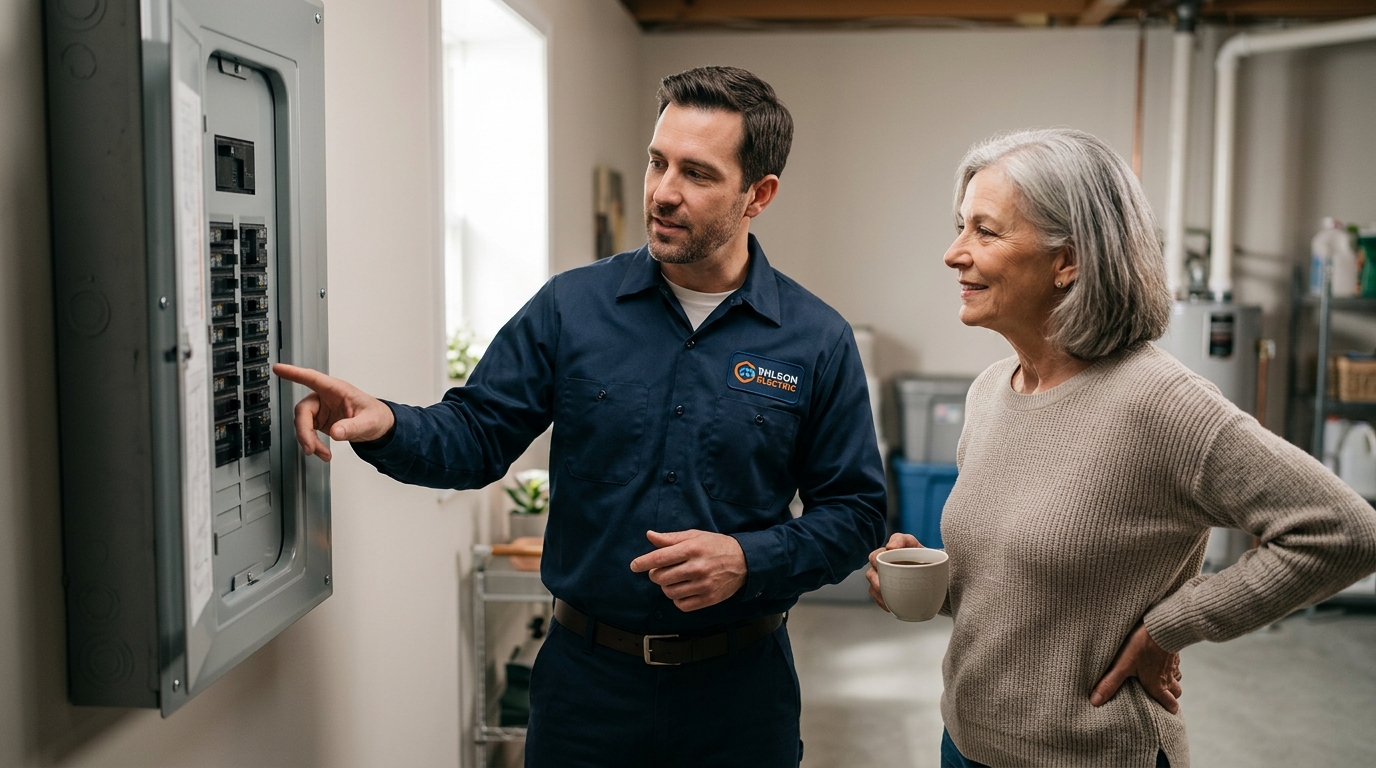
Your electrical panel is the central hub that receives utility power and distributes it to every circuit in your home. When that hub is outdated or overloaded, the risks range from nuisance breaker trips to devastating electrical fires. Whether you live in an older home in the Rochester area or anywhere across upstate New York, understanding how to upgrade your electrical panel is one of the smartest safety investments you can make. Below, Go Wilson Electric walks you through every step, from recognizing warning signs to choosing the right amperage and hiring a licensed professional.
What Is an Electrical Panel?
An electrical panel, also called a breaker box or service panel, is the central distribution point that routes electricity from your utility line to individual circuits throughout your home. It contains circuit breakers that automatically shut off power when a circuit draws too much current, protecting wiring and appliances from overloads and short circuits.
Most panels installed before the 1990s were rated at 60 or 100 amps. Modern households with air conditioning, home offices, and EV chargers typically need at least 200 amps to operate safely. If your panel has not been touched in decades, it may be time to explore the electrical services offered by Go Wilson Electric.
Warning Signs You Need an Upgrade
Recognizing the symptoms of an overloaded or failing panel is the first step toward a safer home. Here are the most common red flags:
- Frequent breaker trips when running multiple appliances.
- Flickering or dimming lights when your HVAC kicks on.
- Burning smell or scorch marks near the panel.
- Warm-to-the-touch breakers or buzzing sounds.
- Rust or corrosion inside the panel enclosure.
- Recalled panel brands such as Federal Pacific or Zinsco still in service.
If you notice any of these issues, do not delay. Contact a licensed electrician in upstate New York for an emergency inspection.
Step-by-Step Panel Upgrade Process
1. Schedule a Professional Assessment
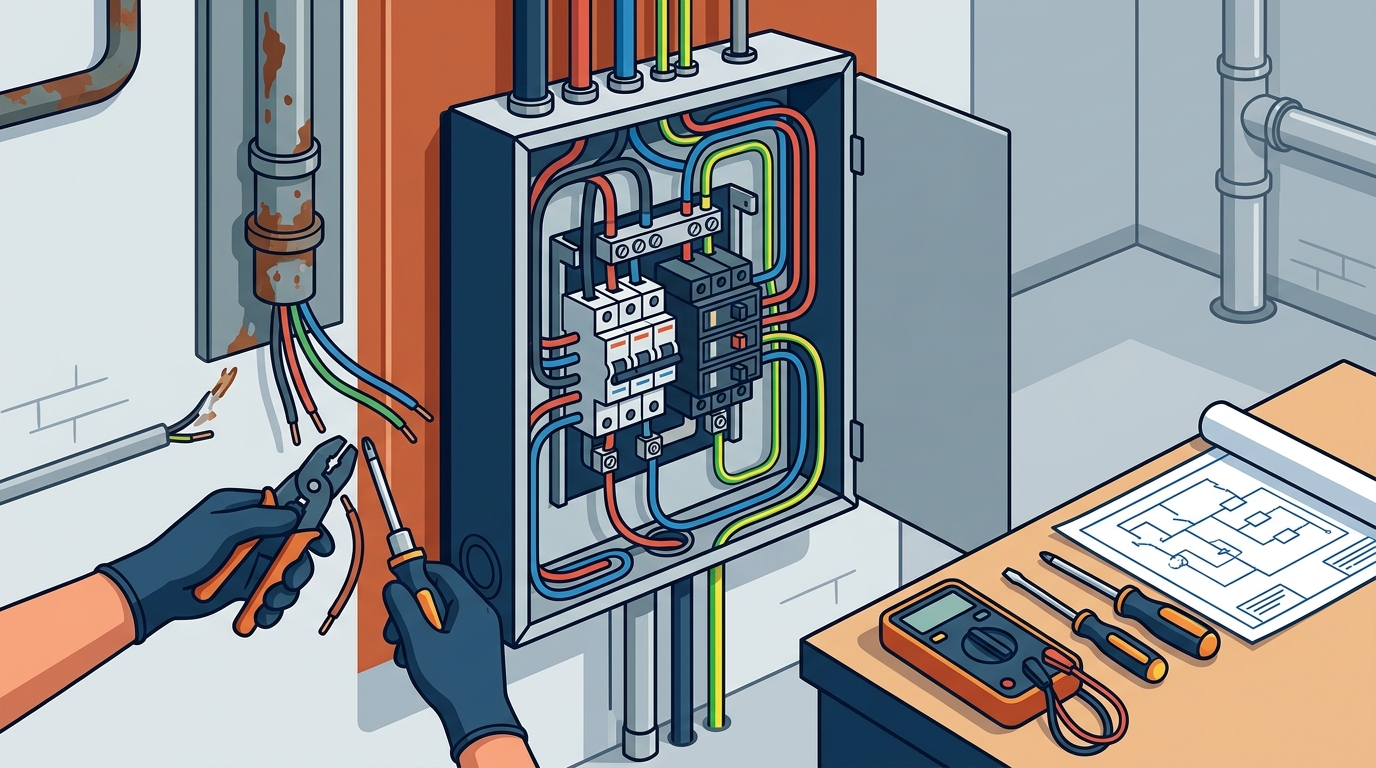
A licensed electrician will evaluate your existing panel, wiring condition, and total electrical load. This site evaluation determines whether you need a simple panel swap or a full service upgrade involving meter base and utility coordination.
2. Obtain Permits and Utility Approval
Electrical panel upgrades almost always require a permit from your local building department. Your electrician will handle permit applications and coordinate with your utility company to disconnect and reconnect the meter safely.
3. Installation and Testing
The electrician disconnects the old panel, installs the new unit, reconnects all circuits, and verifies proper grounding and bonding. A final inspection by a local code official ensures everything meets the National Electrical Code (NEC) before the utility restores power.
Go Wilson Electric handles the entire process, from initial safety inspections through final sign-off, so you never have to coordinate between contractors and inspectors on your own.
Choosing the Right Amperage
Amperage is the measure of total electrical capacity your panel can safely deliver at one time. Selecting the correct size prevents overloads and prepares your home for future needs.
| Panel Size | Best For | Typical Cost Range |
|---|---|---|
| 100-Amp | Small homes, no major appliances | $800 - $2,500 |
| 200-Amp | Average family home, EV charger, central AC | $1,800 - $4,500 |
| 400-Amp | Large homes, pools, workshops, solar | $2,000 - $4,500+ |
A 200-amp panel is the most common upgrade for homes in upstate New York. It provides ample capacity for modern appliances, a Level 2 EV charger, and future additions. Learn more about how Go Wilson Electric supports EV charger installations and other high-demand projects on our homepage.
NEC Code Updates You Should Know
The National Electrical Code is a set of safety standards updated every three years by the National Fire Protection Association (NFPA). Recent updates directly affect panel upgrades:
- Surge protection on every panel: The 2024 NEC requires surge protection devices on all new or upgraded electrical panels to safeguard electronics from voltage spikes.
- Exterior service disconnect: Every home must now have an outside disconnect switch so emergency responders can cut power without entering the building.
- Expanded GFCI and AFCI protection: More circuits now require ground-fault and arc-fault protection to reduce shock and fire risks.
Staying ahead of code changes protects your family and avoids costly rework later. The team at Go Wilson Electric stays current on every NEC cycle so your upgrade is fully compliant from day one.
Panel Upgrade Costs in 2026
According to This Old House, electrical panel upgrades typically cost between $800 and $4,000, with most homeowners paying $1,300 to $3,000 for a 200-amp system. Northeast markets tend to run 40 to 60 percent higher than southern states due to unionized labor rates and stricter code requirements.
Key cost factors include panel amperage, condition of existing wiring, accessibility of the panel location, permit fees ($50 to $300), and whether utility coordination is needed. Always request a detailed written estimate before work begins.
Key Takeaways
- An electrical panel upgrade is essential if your home still runs on 60 or 100 amps and you plan to add modern loads like EV chargers or central AC.
- Warning signs include frequent breaker trips, flickering lights, burning smells, and recalled panel brands like Federal Pacific or Zinsco.
- The 2024 NEC now requires surge protection devices and exterior disconnects on all new or upgraded panels.
- A standard 200-amp upgrade costs $1,800 to $4,500, with Northeast pricing typically higher.
- Permits and inspections are required for virtually all panel upgrades.
- Only a licensed electrician should perform panel work to ensure code compliance and safety.
- Go Wilson Electric handles every phase of the upgrade process for upstate New York homeowners.
Frequently Asked Questions
How long does an electrical panel upgrade take?
Most residential panel upgrades are completed in one day, typically 6 to 10 hours of on-site work. Complex projects involving rewiring or utility coordination may extend to two days.
Do I need a permit to upgrade my electrical panel?
Yes. In New York and most other states, a permit and inspection are required for any panel replacement or amperage increase. Your electrician typically handles this process on your behalf.
How do I know if my panel is dangerous?
Panels made by Federal Pacific Electric (FPE) or Zinsco have been widely documented as fire hazards. If your panel carries either brand name, schedule an inspection immediately.
Can I upgrade my panel myself?
No. Panel upgrades involve working with live utility connections and require a licensed electrician. DIY panel work is illegal in most jurisdictions and extremely dangerous.
What is the difference between a panel upgrade and a panel replacement?
A panel replacement is a swap of the physical box and breakers at the same amperage. A panel upgrade increases the amperage capacity, often requiring a new meter base, service entrance cable, and utility coordination.
Will upgrading my panel increase my home value?
Yes. A modern 200-amp panel is often a requirement for new home insurance policies and reassures buyers during inspections, potentially adding thousands of dollars to resale value.
Does Go Wilson Electric serve my area?
Go Wilson Electric provides electrical contracting services throughout upstate New York, including the greater Rochester region. Contact us to confirm service availability at your address.
Schedule Your Electrical Panel Upgrade Today
Do not wait for flickering lights to become a fire hazard. Go Wilson Electric delivers safe, reliable panel upgrades with honest pricing and exceptional attention to detail. Request your free panel assessment and take the first step toward a safer home.