

Selecting the right electrical contractor requires careful evaluation of credentials, pricing structures, and operational history. According to the National Fire Protection Association, electrical failures cause roughly 44,000 home fires annually across the United States. This statistic highlights why vetting your service provider is critical for household safety. You must prioritize licensed professionals who follow strict code compliance. A qualified contractor will provide transparent pricing and comprehensive warranties. Homeowners should verify insurance coverage before scheduling any on-site work.
Verify Licensing and Insurance Credentials
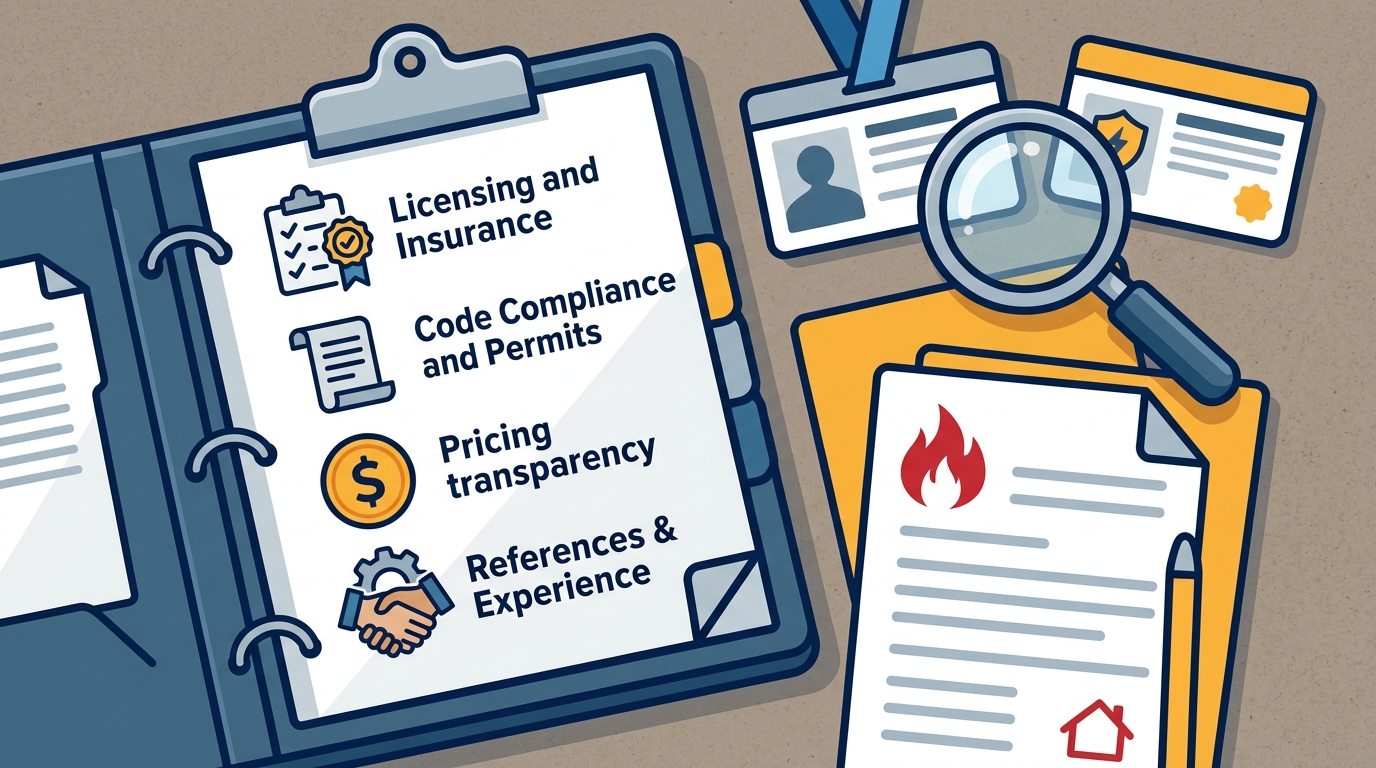
An electrical service provider must hold active state licensing to operate legally. This credential confirms the technician has passed rigorous examinations and background checks. Insurance coverage protects your property from accidental damage during complex installations. You should always request proof of both general liability and workers compensation policies. A licensed electrical contractor is a professional authorized by state regulatory boards to perform power distribution work. (Home Go Wilson Electric)
Family-owned operations often maintain stricter oversight of their field staff. They typically invest heavily in continuing education to meet evolving building codes. Always verify the license number through your local municipal database. Never hire unlicensed handymen for main panel upgrades or substation connections. Visit our services page to review our complete credential portfolio.
Evaluate Experience and Specialized Expertise
Years in business directly correlate with technical proficiency and problem-solving speed. Established companies have navigated numerous regulatory changes and infrastructure upgrades. They possess the diagnostic tools required to identify hidden wiring faults. You should ask about their specific experience with your project type. A seasoned electrical contractor is a business entity with proven track records in residential and commercial power systems.
Residential vs Commercial Capabilities
Some firms specialize exclusively in single-family home renovations. Others focus on large-scale commercial infrastructure and industrial machinery. Verify that your chosen provider handles your specific voltage requirements. Upstate New York contractors often manage harsh winter load demands. Ask about their experience with high-capacity circuit breakers and transformer installations. Review our frequently asked questions to understand typical project scopes.
Compare Pricing Models and Transparency
Upfront pricing eliminates surprise charges and builds long-term trust. Reputable companies provide detailed written estimates before breaking ground. Hourly rates vary significantly based on project complexity and material costs. You should request a line-item breakdown for all labor and hardware. Transparent electrical service pricing is a billing structure that clearly outlines all labor rates, material markups, and permit fees before work begins.
Hidden fees often appear during emergency callouts or after-hours service requests. Always confirm whether diagnostic visits carry a flat fee or a deposit. Compare multiple quotes to identify market rate outliers. Extremely low bids frequently indicate skipped safety inspections or substandard wire gauges. Panel replacement costs typically range between two thousand and five thousand dollars depending on amperage and regional labor rates. Request a detailed estimate by visiting our quote request form.
Review Safety Protocols and Compliance Standards
Safety compliance prevents catastrophic equipment failures and protects your family. Reputable teams follow strict occupational safety guidelines set by federal agencies. They utilize arc-flash protection gear and insulated hand tools on every job site. You should ask about their lockout-tagout procedures before major repairs. A certified electrical technician is a worker who has completed standardized safety training and passed competency assessments.
Code Compliance and Permitting
Major electrical modifications require municipal permits to ensure legal compliance. Your contractor should handle all inspection scheduling and paperwork. Unpermitted work can drastically reduce your property resale value. Always verify that their work meets the latest National Electrical Code revisions. Proper permitting also ensures your homeowner insurance remains fully valid. Critical power failures require immediate attention to prevent fire hazards or equipment damage. Contact our team to schedule a compliance audit today.
Assess Customer Support and Warranty Coverage
Reliable customer support resolves issues quickly without excessive back-and-forth. Look for companies that offer direct phone lines and rapid response times. Written warranties protect your investment against premature component failures. You should verify whether labor warranties cover both parts and installation costs. A comprehensive electrical warranty is a contractual guarantee that covers defective materials and workmanship errors for a specified period.
Family-managed businesses often prioritize long-term client relationships over quick transactions. They typically stand behind their work with lifetime support guarantees. Check online reviews to gauge their responsiveness to post-installation questions. Prompt communication prevents minor electrical faults from escalating into major hazards. Reputable emergency teams typically arrive within two to four hours of your call. Explore our customer experience guidelines to understand our support standards.
Service Provider Comparison Matrix
| Provider Type | Licensing Status | Pricing Transparency | Warranty Coverage | Best Use Case |
|---|---|---|---|---|
| Licensed Electrical Contractor | State Certified | Upfront Estimates | Labor and Parts | Major Renovations |
| General Handyman | Unlicensed | Hourly Rates | Limited | Minor Repairs |
| Emergency Response Team | Specialized | After-Hour Multipliers | Diagnostic Only | Critical Failures |
| DIY Installation | N/A | Material Costs | Manufacturer Only | Simple Fixture Swaps |
Key Takeaways
- Always verify active state licensing and insurance before scheduling any on-site work.
- Established companies with decades of combined expertise handle complex load calculations efficiently.
- Transparent electrical service pricing prevents surprise charges and protects your budget.
- Municipal permits ensure your modifications meet current safety codes and insurance requirements.
- Family-owned operations typically prioritize long-term client relationships over quick transactions.
- Written warranties covering both labor and materials protect your long-term investment.
- Upstate New York contractors must manage harsh seasonal load demands and code updates.
Frequently Asked Questions
How do I verify an electrician's license number?
You can verify a license number through your state contractor board website or local municipal database. Most regulatory portals allow instant searches by name or business entity. Always request the physical license card before work begins.
What is the average cost to replace a residential electrical panel?
Panel replacement costs typically range between two thousand and five thousand dollars depending on amperage and regional labor rates. Upgrading to a 200-amp system usually costs more than standard 100-amp replacements. Always request a detailed line-item estimate before authorizing work.
Do I need a permit for installing new ceiling fans?
Minor fixture replacements rarely require municipal permits in most jurisdictions. Major circuit modifications or subpanel installations always require official approval. Your contractor should clarify permitting requirements during the initial consultation.
How quickly should an emergency electrical repair be completed?
Critical power failures require immediate attention to prevent fire hazards or equipment damage. Reputable emergency teams typically arrive within two to four hours of your call. Always confirm response times when scheduling urgent service requests.
What documents should I receive after project completion?
You should receive a final invoice, updated circuit diagrams, and warranty certificates. Proper documentation ensures future technicians can safely access your power distribution system. Keep all permits and inspection approvals in a dedicated project folder.
Schedule Your Professional Consultation
Stop guessing which contractor can safely handle your power distribution needs. Our licensed team delivers transparent pricing and code-compliant installations across Upstate New York. Contact us today to request a free consultation and detailed project estimate. Visit our services page to explore our complete residential and commercial offerings. Request your free quote now and secure reliable power solutions for your property.