

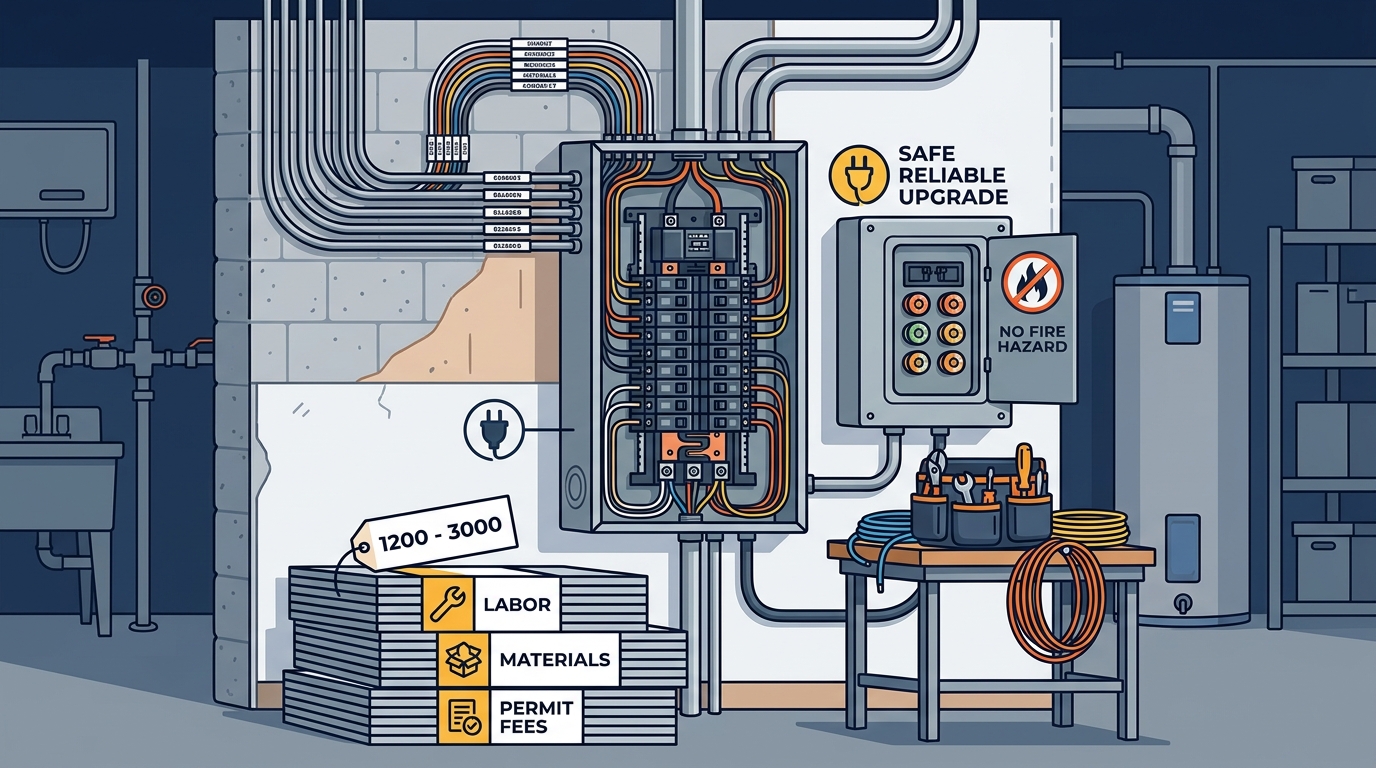
Homeowners frequently ask about the financial commitment required for a modern electrical upgrade. The national average for a complete residential panel replacement typically falls between one thousand two hundred and three thousand dollars. This figure accounts for labor, materials, and municipal permit fees across most American housing markets. Upgrading your system eliminates fire hazards and supports modern appliance loads. Professional installation remains the only safe method for handling high-voltage distribution equipment.
Understanding Modern Panel Components
Defining the Distribution Hub
An electrical panel is a centralized metal enclosure that distributes incoming utility power to individual branch circuits throughout a building. Modern units feature circuit breakers that automatically interrupt power during overload conditions. These devices replace outdated fuse boxes that require manual replacement after every trip. Upgrading to a 200-amp system provides sufficient capacity for contemporary heating, cooling, and computing loads. Homeowners should verify their current amperage rating before scheduling any physical work.
Key Hardware Specifications
Manufacturers produce panels using either aluminum or copper bus bars. Copper bus bars offer superior conductivity and longer service life for standard residential applications. Breaker ratings typically range from twenty to four hundred amps depending on the property size. Professional electricians evaluate existing wiring gauge and grounding methods before selecting replacement hardware. Proper ventilation and clearance distances remain mandatory for safe operation.
Detailed Cost Breakdown Factors
Material and Labor Expenses
The base price for a standard 100-amp replacement panel usually starts around eight hundred dollars. Labor charges typically add another five hundred to twelve hundred dollars depending on regional wage standards. Industry data shows that complex retrofits involving outdated knob-and-tube wiring increase total project costs significantly. Contractors must disconnect utility power, remove the old enclosure, and terminate new conductors safely.
Permit and Inspection Fees
Municipal authorities require formal permits for all major electrical modifications. Permit fees generally range from fifty to two hundred dollars based on local tax structures. Inspectors verify that grounding rods, bonding jumpers, and arc-fault protection meet current safety codes. Skipping official inspections voids manufacturer warranties and creates serious liability issues during future property sales.
Safety and Efficiency Benefits
Eliminating Fire Hazards
Outdated panels frequently lack modern overload protection mechanisms. Thermal stress on aging connections generates excessive heat that degrades insulation over time. Federal safety reports indicate that electrical failures cause thousands of residential fires annually. Replacing a deteriorating unit removes these ignition risks entirely. Modern breakers respond instantly to short circuits and ground faults. (The Key to)
Supporting Modern Appliance Loads
Contemporary households operate electric vehicles, heat pumps, and smart home networks simultaneously. Older forty-amp or sixty-amp systems cannot handle these continuous high-draw demands. Upgrading to a 200-amp distribution system prevents frequent nuisance tripping and voltage drops. Homeowners gain reliable power delivery for cooking, climate control, and digital infrastructure.
Permits and Local Code Requirements
Compliance Standards
Local building departments enforce strict adherence to the National Electrical Code. Updated regulations mandate arc-fault circuit interrupters for bedroom circuits and ground-fault protection for wet locations. Code compliance data shows that unpermitted work frequently fails final property appraisals. Licensed contractors handle all paperwork and coordinate municipal inspections seamlessly.
Utility Company Coordination
Utility providers must physically disconnect and reconnect main service lines during panel swaps. Scheduling these utility appointments often adds one to three business days to the project timeline. Homeowners should expect temporary power outages during the transition window. Professional crews manage utility coordination to minimize downtime and ensure safe re-energization.
Choosing the Right Service Provider
Verification and Credentials
Homeowners must verify state licensing, liability insurance, and workers compensation coverage before hiring anyone. Family-owned contractors typically offer transparent pricing without hidden markup fees. Reading verified customer reviews reveals consistent workmanship standards and punctuality records. Always request a detailed written estimate before authorizing any physical work. (Accessing Workers Compensation)
Warranty and Support Policies
Reputable electrical companies provide comprehensive labor warranties covering workmanship defects for multiple years. Manufacturers typically guarantee hardware against factory defects for a decade or longer. Written guarantees protect homeowners from premature component failures or installation errors. Establish clear communication channels before, during, and after the project completion.
Key Takeaways
- Standard residential panel replacements typically cost between one thousand two hundred and three thousand dollars.
- Modern 200-amp systems support contemporary appliance loads and electric vehicle charging stations.
- Municipal permits and inspections remain mandatory for legal compliance and insurance validity.
- Outdated fuse boxes create severe fire hazards and lack modern overload protection mechanisms.
- Licensed contractors handle utility coordination, permit filing, and final safety inspections.
- Written warranties cover both labor performance and manufacturer hardware defects.
- Upgrading prevents frequent circuit tripping and extends overall property electrical lifespan.
Frequently Asked Questions
How long does a breaker box replacement take?
Most standard residential installations require four to eight hours to complete safely. Complex retrofits involving outdated wiring or utility coordination may extend the timeline to a full business day. Homeowners should plan for temporary power interruptions during the transition period.
Can I replace my breaker box myself?
Handling high-voltage distribution equipment without proper licensing violates state safety regulations and voids insurance coverage. Professional installation remains the only legal method for modifying main service entrances. DIY modifications frequently fail municipal inspections and create severe liability risks.
What happens if my panel is outdated?
Older panels lack modern overload protection and frequently experience thermal stress on aging connections. Insurance providers often deny claims related to electrical failures originating from obsolete equipment. Industry safety data shows that outdated enclosures increase fire probability significantly. Replacing the unit eliminates these hazards entirely.
Do I need a permit for panel replacement?
Municipal authorities require formal permits for all major electrical modifications to ensure code compliance. Inspectors verify grounding methods, bonding jumpers, and arc-fault protection before approving the work. Skipping official inspections voids manufacturer warranties and creates serious liability issues during future property sales.
How do I choose the right amperage rating?
Homeowners should consult a licensed electrician to calculate total square footage, appliance counts, and future expansion plans. Modern standards typically recommend 200-amp systems for contemporary households. Energy consumption data shows that residential power demands continue rising annually. Proper sizing prevents frequent circuit tripping and voltage drops.
What is the lifespan of a modern breaker box?
High-quality residential panels typically last thirty to fifty years with proper maintenance and environmental conditions. Regular inspections identify early corrosion or loose terminal connections before they cause failures. Homeowners should schedule professional evaluations if the unit shows signs of rust, burning smells, or frequent breaker trips.
Will replacing my panel increase my home value?
Updated electrical infrastructure significantly improves property appraisals and marketability during sales transactions. Modern panels eliminate buyer objections and streamline insurance underwriting processes. Real estate market data shows that updated electrical systems attract higher offers and faster closings. Homeowners gain long-term financial protection through documented upgrades.
Schedule Your Consultation
Upgrading your electrical infrastructure eliminates fire hazards and supports modern appliance loads. Request a free consultation to receive a transparent, upfront pricing estimate tailored to your property. Our licensed team handles permits, utility coordination, and final inspections seamlessly. Contact us today at 585-54POWER to secure your preferred installation window.
| Panel Amperage Rating | Typical Home Size | Estimated Total Cost | Best Use Case |
|---|---|---|---|
| 100 Amps | Under 1,500 sq ft | $1,200 - $1,800 | Basic residential upgrades |
| 150 Amps | 1,500 - 2,500 sq ft | $1,500 - $2,200 | Standard family homes |
| 200 Amps | Over 2,500 sq ft | $1,800 - $3,000 | Modern appliances and EV charging |
| 400 Amps | Luxury or commercial | $2,500 - $4,500 | High-demand properties |