

Starting a home renovation or commercial build without a clear plan is a recipe for disaster. According to the National Fire Protection Association, electrical failure is a leading cause of home fires, accounting for roughly 47,000 fires annually in the United States. This statistic highlights why due diligence is not just a formality, but a critical safety requirement. Before you hand over a deposit or schedule a crew, you must establish a foundation of trust and technical clarity. This guide outlines the exact questions you need to ask to ensure your project is completed safely, on budget, and to code.
Verify Credentials and Insurance
The first step in vetting any contractor is confirming their legal standing. In the electrical trade, licensing is non-negotiable. An unlicensed electrician may lack the rigorous training required to handle high-voltage systems safely. You should always ask for proof of their current state license and verify it with your local licensing board.
Insurance is equally critical. If an accident occurs on your property, you do not want to be liable for medical bills or property damage. Ask for a certificate of insurance that covers both workers' compensation and general liability. This protects you from financial ruin if a worker is injured or if your home is damaged during the work.
Additionally, inquire about their years in business and local reputation. A company with decades of experience, such as Go Wilson Electric, brings a depth of knowledge that new entrants simply cannot match. Longevity in the industry often correlates with reliability and a proven track record of customer satisfaction.
Understand Pricing and Payment Structures
Money is often the most sensitive part of any home improvement project. Transparency in pricing is the hallmark of a professional service provider. You must ask how the contractor calculates their costs. Do they charge a flat rate for the entire project, or do they bill by the hour? Flat rates provide budget certainty, while hourly rates can fluctuate if complications arise.
Ask for a detailed written estimate that breaks down labor, materials, and any potential additional costs. This document should serve as the baseline for your agreement. Never agree to start work without a signed contract that outlines the total price.
Furthermore, clarify the payment schedule. Reputable contractors typically require a small deposit to secure the job and order materials, with the balance due upon completion. Be wary of anyone demanding full payment upfront. This is a common red flag for scams. For more insights on maintaining financial control, review our Customer Experience guidelines.
Clarify Timeline and Availability
Time is money, especially when dealing with electrical work that might disrupt your daily routine. Ask the contractor for a realistic start date and an estimated completion window. Electrical projects can be unpredictable, so a good contractor will provide a range rather than a single day.
Inquire about their current workload. Are they available to start next week, or are they booked out for months? This helps you plan your renovation schedule accordingly. If you have a hard deadline, such as a house closing or a business opening, communicate this clearly upfront.
Also, ask about their communication protocol during the project. Will you have a dedicated project manager? How often will you receive updates? Regular communication prevents surprises and ensures that any delays are addressed immediately. You can learn more about our service approach by visiting our Services page.
Discuss Permits and Inspections
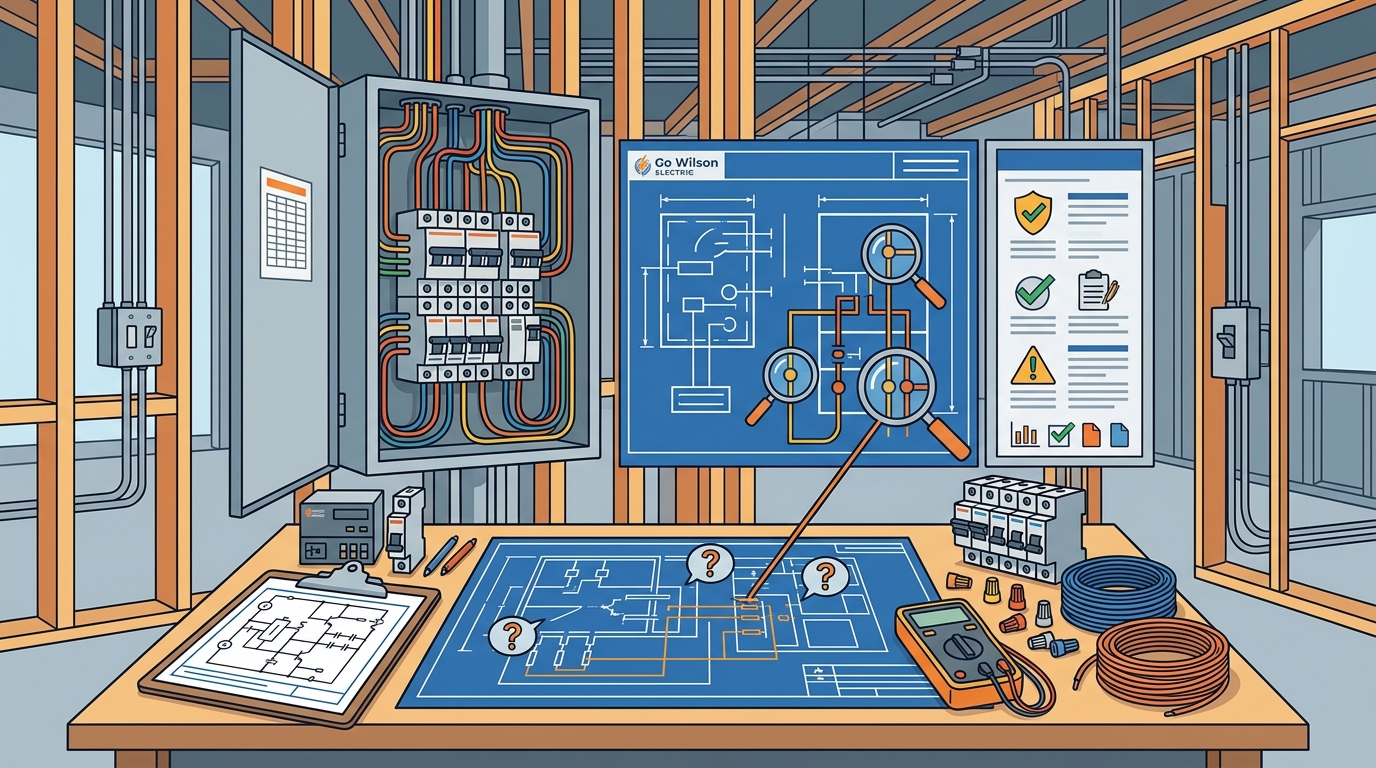
Most electrical work requires a permit from your local building department. This is not just bureaucratic red tape; it is a safety check. A permit ensures that a certified inspector will review the work to ensure it meets local and national electrical codes.
Ask who is responsible for pulling the permit. In many cases, the contractor handles this process, but you should confirm this in writing. If the contractor suggests skipping permits to save money, walk away. Unpermitted work can void your home insurance and cause significant issues when you try to sell your property.
Ensure that the final inspection is scheduled and passed before you make the final payment. This is your last line of defense. If the work fails inspection, the contractor must correct it at their own expense. For a deeper understanding of our commitment to safety, check out our Frequently Asked Questions section.
Review Warranties and Guarantees
Quality workmanship should be backed by a guarantee. Ask the contractor what warranty they offer on their labor. A standard warranty might range from one to five years, covering any defects in the installation. This shows confidence in their work.
Additionally, ask about the warranties on the materials and equipment they install. Manufacturers often provide warranties on items like panels, breakers, and lighting fixtures. The contractor should help you understand these terms and ensure you receive the necessary documentation.
Understanding the warranty process is crucial. If something goes wrong after the job is done, you need to know who to call and what the process is for filing a claim. This peace of mind is invaluable. For more details on our guarantees, see our Contact page.
Service Comparison Overview
Not all electrical providers are created equal. Below is a comparison of what to expect from top-tier professionals versus unvetted handymen.
| Feature | Licensed Electrician | Unlicensed Handyman |
|---|---|---|
| Licensing & Insurance | Verified and Current | Often None or Expired |
| Permit Handling | Managed by Contractor | Often Skipped |
| Code Compliance | Strict Adherence | Variable Quality |
| Warranty on Labor | 1-5 Years Standard | None or Verbal Only |
| Safety Standards | National Electrical Code | Informal Practices |
Key Takeaways
- Verify Licensing: Always ask for proof of current state licensing and insurance before hiring.
- Get It in Writing: Never start work without a detailed, signed contract outlining scope and price.
- Check Permits: Ensure the contractor pulls all necessary permits for safety and legal compliance.
- Ask About Warranties: Confirm the duration and coverage of labor and material warranties.
- Clarify Timelines: Establish clear start and end dates to manage expectations and disruptions.
- Review References: Ask for recent references to gauge reliability and work quality.
- Understand Payment Terms: Avoid full upfront payments; use a milestone-based payment schedule.
Frequently Asked Questions
Do I need a permit for a simple outlet replacement?
While minor repairs like replacing a single outlet often do not require a permit, any new wiring, panel upgrades, or major circuit additions do. It is always best to consult with your local building department or your electrician to determine the specific requirements for your area.
How long does a typical electrical project take?
Timeline varies significantly based on scope. A simple fixture installation might take a few hours, while a whole-home rewiring can take several weeks. Always ask for a detailed timeline during the estimate phase to plan accordingly.
What is the difference between a master electrician and a journeyman?
A journeyman electrician has completed the required training and is licensed to work under supervision. A master electrician has additional experience and licensing, allowing them to pull permits, design systems, and supervise other electricians. For complex projects, having a master electrician involved is crucial.
Can I stay home during the electrical work?
For minor repairs, yes. However, for major projects involving panel work or whole-house rewiring, you may need to vacate the premises for safety reasons. Your contractor should advise you on this during the planning stage.
What should I do if the work fails inspection?
If the work fails inspection, the contractor is responsible for correcting the issues at their own expense. Do not make the final payment until the work has passed inspection and you have received the final sign-off from the building department.
How do I find a reliable electrician in Upstate NY?
Look for licensed, insured professionals with strong local references. Companies like Go Wilson Electric have built their reputation on quality workmanship and customer trust in the Upstate New York region.
Is it safe to hire an electrician for emergency services?
Yes, but ensure they are available 24/7 for emergencies. Power outages or sparking outlets require immediate attention to prevent fire hazards. Ask about their emergency response times and fees before the crisis occurs.
Schedule Your Consultation
Ready to start your project with confidence? Do not leave your home's safety to chance. Contact Go Wilson Electric today for a free consultation and quote. Our team of licensed professionals is ready to provide the honest, high-quality service you deserve. Call us at 585-54-POWER or visit our Request Quote page to get started.