
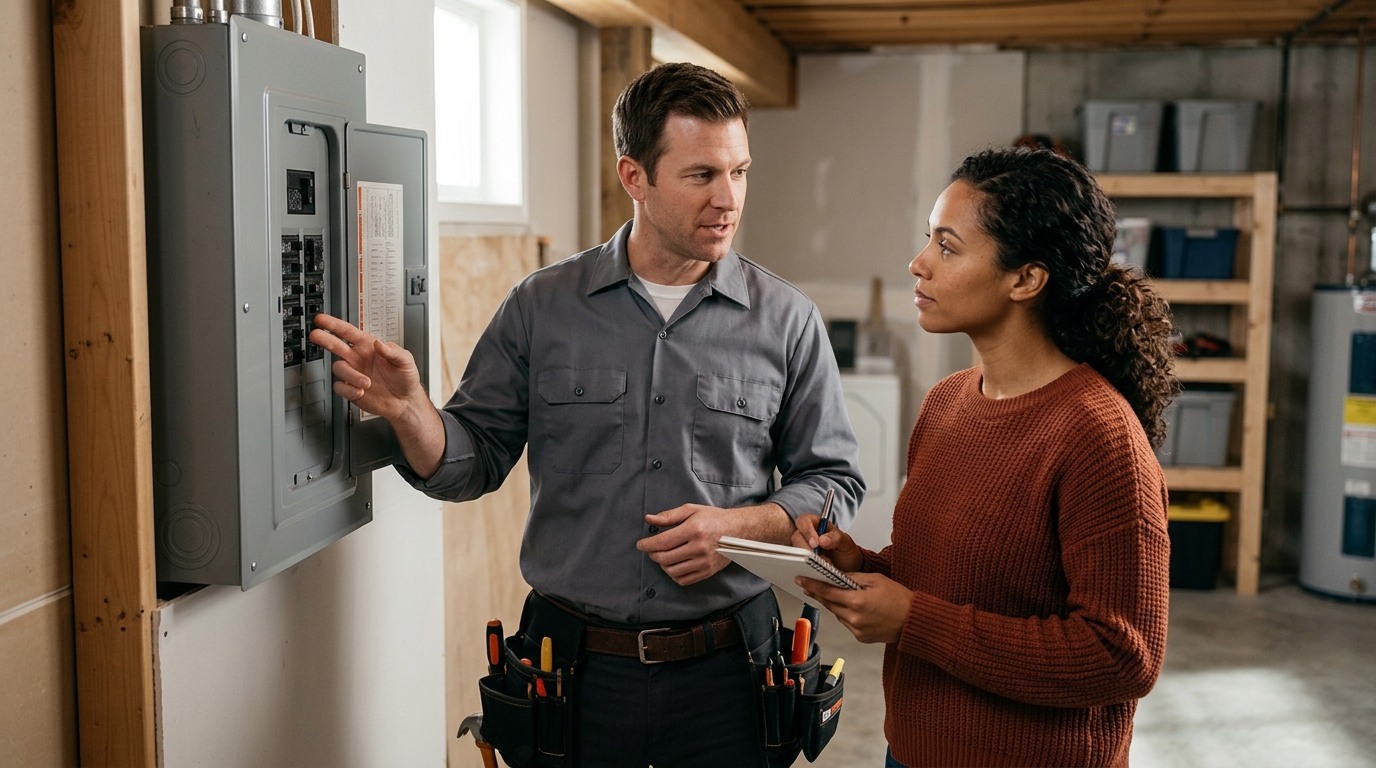
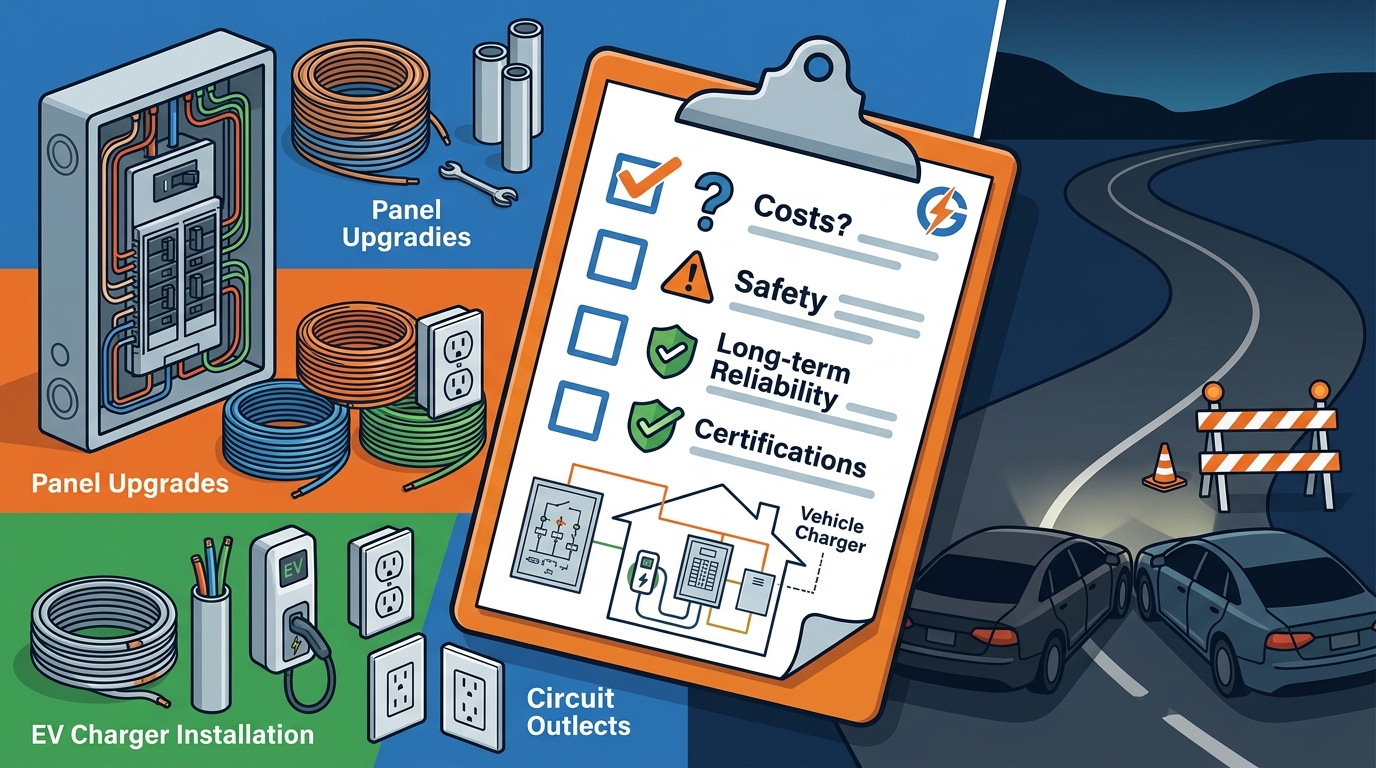
Starting an electrical project without asking the right questions is like driving at night with your headlights off. Whether you are upgrading a panel, adding circuits for a home addition, or installing EV charger wiring, the questions you ask before work begins determine cost, safety, and long-term reliability. According to the U.S. Fire Administration, over 26,000 residential fires in 2022 were caused by electrical malfunctions. A few well-placed questions can protect your home, your budget, and your family. Below, the team at Go Wilson Electric breaks down the essential questions every upstate New York homeowner should ask.
1. Are You Licensed and Insured?
A licensed electrician is a professional who has completed rigorous training, testing, and state-mandated requirements to legally perform electrical work. This is the single most important question you can ask. Licensing proves competency, and insurance protects you from liability if an accident occurs on your property.
Ask to see a current copy of both documents. In New York State, electrical contractors must hold valid credentials issued by local municipalities. If a contractor hesitates or cannot provide proof, treat it as a red flag and move on. The Go Wilson Electric team is fully licensed and insured for residential and commercial work across upstate New York.
2. What Is the Full Scope of the Project?
A project scope is a detailed outline of all the work to be performed, the materials needed, and the expected outcome. Before any wires are touched, you need clarity on exactly what will happen in your home.
Define Deliverables Up Front
Ask your electrician to list every task involved. For example, a panel upgrade may also require new grounding, updated breakers, or re-routing existing wiring. Understanding the full scope prevents surprise add-ons later.
Check Infrastructure Compatibility
If you are adding circuits or installing an EV charger, confirm whether your existing electrical infrastructure can handle the additional load. Your contractor should evaluate your current panel capacity before starting. Learn more about the range of electrical services Go Wilson Electric provides.
3. Will Permits Be Required?
An electrical permit is an authorization from your local building department that confirms planned work meets municipal safety standards. Many homeowners skip this question, but unpermitted work can create serious problems during home sales, insurance claims, or future inspections.
A professional electrician should know whether your project requires a permit and should handle the application process for you. In most upstate New York municipalities, panel upgrades, new circuit installations, and service changes all require permits. Your contractor should also coordinate the required inspections once work is complete.
4. What Will It Cost and How Long Will It Take?
Transparent pricing and realistic timelines separate trustworthy contractors from the rest. Ask for a written estimate that breaks down labor, materials, and any permit fees.
| Question | Why It Matters | Red Flag If Missing |
|---|---|---|
| Itemized written estimate | Prevents hidden charges | Verbal-only quotes |
| Estimated project duration | Helps you plan around disruptions | No timeline commitment |
| Payment schedule and terms | Protects both parties financially | Full payment demanded upfront |
| Change order policy | Defines how scope changes affect cost | No written policy |
| Permit and inspection fees | Avoids budget surprises | Fees not mentioned at all |
Rates vary by location and project complexity. Getting at least two to three estimates gives you a clearer picture of fair market pricing in the upstate New York area. Request a free estimate from Go Wilson Electric to start comparing.
5. How Do You Handle Safety and Code Compliance?
Electrical code compliance is the adherence to the National Electrical Code (NEC) and any local amendments that govern how electrical systems must be installed and maintained. Your electrician should be fluent in the current code cycle and any region-specific requirements.
GFCI and AFCI Protection
Ask whether all kitchen, bathroom, garage, and exterior outlets will include GFCI protection. Modern code also requires AFCI breakers in bedrooms and living areas. These devices dramatically reduce shock and fire risk.
Older Homes and Aluminum Wiring
If your home was built between the mid-1960s and mid-1970s, ask about aluminum wiring. Aluminum wiring is not inherently dangerous, but it requires specific connectors and devices rated for aluminum conductors. Improper connections are a documented safety hazard that a qualified electrician will identify and address.
6. Do You Offer Warranties on Materials and Labor?
Quality contractors stand behind their work. Ask what warranties cover, how long they last, and what the process looks like if something goes wrong after the project is finished. Products installed should carry manufacturer warranties, and the contractor should guarantee their own workmanship separately.
At Go Wilson Electric, every project is completed with exceptional attention to detail, and our team is available to address concerns after the job is done. A warranty is not just a promise; it is a measure of confidence in the work performed.
Key Takeaways
- Always verify licensing and insurance before hiring any electrical contractor.
- Define the full project scope in writing to avoid surprise costs.
- Confirm whether permits are required and who will obtain them.
- Request itemized, written estimates from at least two to three contractors.
- Ask about code compliance, especially GFCI/AFCI protection and aluminum wiring concerns.
- Ensure both material and labor warranties are included.
- Choose a contractor who communicates clearly and welcomes your questions.
Frequently Asked Questions
How do I know if my electrical project requires a permit?
Most projects that involve new wiring, panel upgrades, or service changes require a permit. Your electrician should confirm this with your local building department before work begins.
Should I get multiple estimates before choosing an electrician?
Yes. Getting two to three estimates helps you compare pricing, timelines, and communication styles so you can make a well-informed decision.
What is the difference between a licensed electrician and a handyman?
A licensed electrician has passed state-required exams and holds credentials that prove competency in electrical work. A general handyman typically lacks the specialized training and legal authorization to perform electrical installations.
Can I do electrical work myself to save money?
DIY electrical work is risky and often illegal without a permit. Faulty wiring can cause fires, shock hazards, and costly damage that far exceeds the price of hiring a professional.
How long does a typical residential electrical project take?
Small projects like outlet installations may take a few hours. Larger jobs such as panel upgrades or whole-house rewiring can span several days depending on the home's size and complexity.
What should I look for in an electrician's warranty?
Look for separate coverage on both materials and labor. A strong warranty will clearly state the duration, what is covered, and the process for filing a claim.
Why is GFCI protection important?
GFCI (Ground Fault Circuit Interrupter) protection instantly cuts power when it detects a ground fault, preventing electrical shock. It is required by code in wet areas like kitchens, bathrooms, and outdoor outlets.
Ready to Start Your Electrical Project the Right Way?
The right questions lead to the right contractor. Go Wilson Electric serves homeowners and businesses across upstate New York with honest, detail-focused electrical solutions. Contact Go Wilson Electric today to schedule a consultation and get a free, transparent estimate for your next project.