
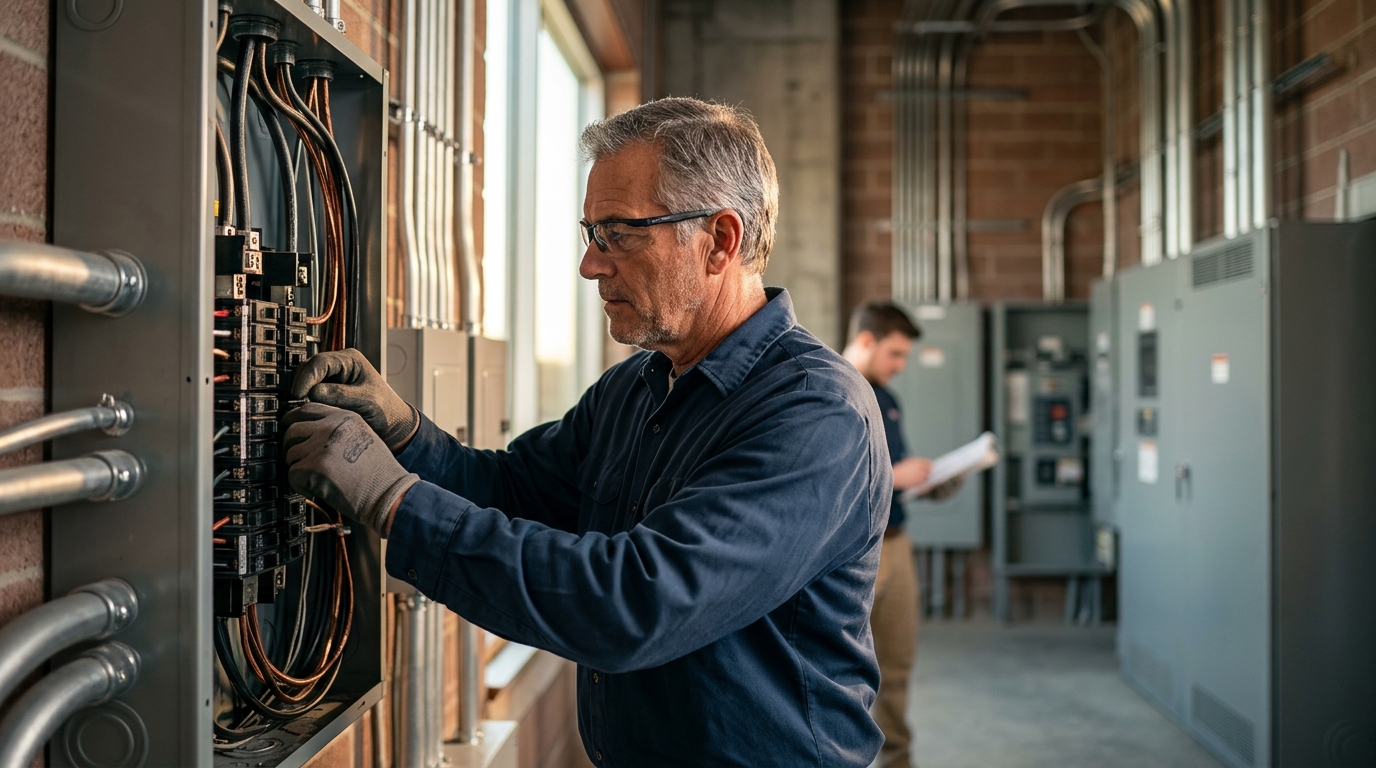
Essential Qualifications and Credentials for Commercial Electricians in Upstate New York
Commercial electrical infrastructure in Upstate New York faces unique challenges due to extreme seasonal weather and aging building codes. According to recent industry data, over 60% of commercial electrical failures stem from improper installation or lack of certified maintenance. This statistic highlights why hiring a qualified professional is not just a preference but a legal and safety requirement. Go Wilson Electric brings over three decades of combined expertise to every commercial project, ensuring that your business remains powered safely and efficiently. Understanding the specific credentials required for these professionals helps property managers make informed decisions.
Licensing and Insurance Requirements
The foundation of any reputable electrical service is proper licensing. In New York State, commercial electricians must hold a valid license issued by the Department of State or local municipal boards. This license proves that the individual has met the educational and apprenticeship hours required by law. Without this credential, work is illegal and voids insurance policies.
Licensing is a formal authorization granted by a government body to practice a specific trade. It ensures that the electrician has passed rigorous exams on the National Electrical Code (NEC). Go Wilson Electric maintains current licensing for all its technicians, providing peace of mind for business owners in Pittsford, Rochester, and surrounding areas.
Insurance is equally critical. Commercial projects carry high risks of property damage or injury. A qualified electrician must carry both general liability insurance and workers' compensation coverage. General liability insurance protects your business from claims if the electrician damages your property. Workers' compensation covers medical costs if a worker is injured on your site. Without these policies, the property owner could be held liable for accidents. (Home Go Wilson Electric)
When evaluating a provider, always request proof of insurance. Do not rely on verbal assurances. Verify that the policy is active and covers the specific scope of your commercial project. This step protects your business from unforeseen financial liabilities.
Technical Certifications and Codes
Beyond the basic license, specialized certifications demonstrate advanced competence. The National Electrical Code (NEC) is the benchmark for safe electrical design and installation in the United States. Compliance with the NEC is not optional for commercial buildings. It is a legal mandate enforced by local building inspectors.
The NEC is a comprehensive set of safety standards for the installation of electrical conductors and equipment. It is updated regularly to address new technologies and safety concerns. Electricians must stay current with these updates to ensure their work passes inspection. Go Wilson Electric prioritizes continuous education to keep its team aligned with the latest NEC revisions.
Additional certifications often include OSHA 10 or OSHA 30-hour safety training. These courses teach workers how to identify and mitigate hazards on job sites. For commercial clients, this training is vital because construction sites are dynamic and hazardous environments. An electrician with OSHA certification is trained to prevent accidents that could delay your project.
Other relevant certifications might include manufacturer-specific training for high-voltage equipment, solar inverters, or backup generators. If your commercial project involves renewable energy, look for NABCEP (North American Board of Certified Energy Practitioners) certification. This credential ensures the installer understands the complexities of grid-tied systems.
Safety Protocols and Compliance
Safety is the core value of professional electrical work. Commercial electricians must adhere to strict safety protocols to protect themselves and your employees. These protocols include lockout/tagout procedures, arc flash protection, and proper use of personal protective equipment (PPE).
Lockout/tagout is a safety procedure used to ensure that dangerous machines are properly shut off and not started up again before maintenance or repair work is completed. In commercial settings, this prevents accidental energization of circuits. Go Wilson Electric enforces strict lockout/tagout policies on every job site. This practice minimizes the risk of electrocution and equipment damage.
Arc flash protection involves wearing specialized gear to protect against the intense heat and light produced by electrical arcs. Arc flashes can cause severe burns and explosions. Qualified electricians assess the potential arc flash hazard before beginning work. They then select the appropriate level of PPE based on the incident energy analysis.
Compliance with local building codes is another critical aspect of safety. Upstate New York has specific requirements for insulation, grounding, and emergency power systems. These codes are designed to withstand local weather conditions, such as heavy snow loads and freezing temperatures. A qualified electrician knows these local nuances and ensures your system is built to last.
Experience and Specialization
Experience matters in commercial electrical work. Residential electricians often lack the training for complex commercial systems. Commercial projects involve three-phase power, high-voltage distribution, and sophisticated control systems. These systems require a different skill set than standard residential wiring.
Three-phase power is a type of electrical system that uses three alternating currents. It is more efficient for powering large motors and heavy machinery found in commercial buildings. Residential systems typically use single-phase power. An electrician must understand the differences to design a safe and efficient commercial system.
Specialization is key. Some electricians focus on data cabling, while others specialize in lighting design or security systems. Go Wilson Electric offers a wide range of services, including car charger installations, generator setups, and security system integrations. This breadth of expertise allows them to handle diverse commercial needs under one roof.
When reviewing a candidate's experience, ask about similar projects they have completed. Have they worked on buildings of your size and type? Do they have references from other commercial clients? Experience with your specific industry, such as healthcare, education, or retail, can be a significant advantage. It means they understand the unique operational requirements of your business.
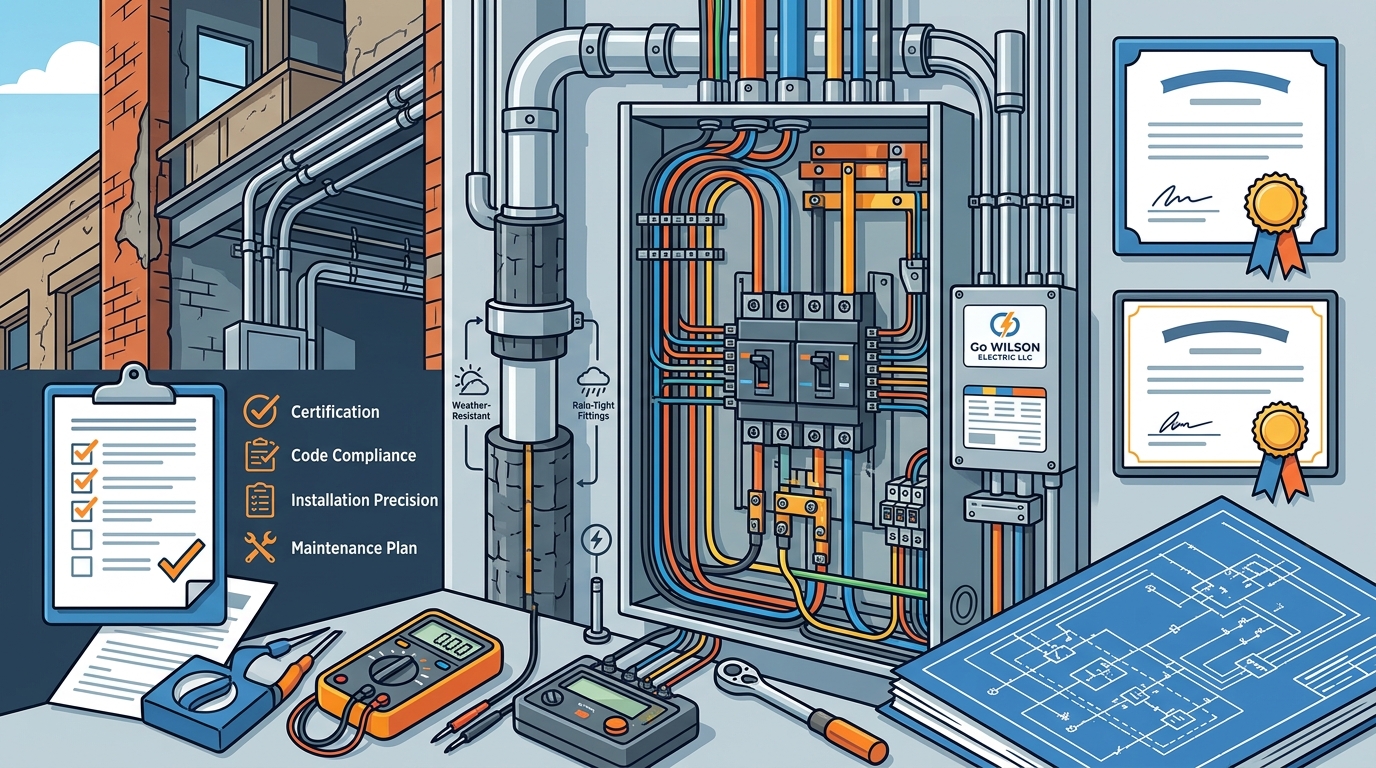
Service Provider Comparison
Choosing the right electrical partner requires comparing key factors. The table below outlines the essential qualifications to look for in a commercial electrician.
| Qualification | Why It Matters | Go Wilson Electric Standard |
|---|---|---|
| State Licensing | Legal requirement for commercial work in NY. | Fully Licensed & Insured |
| Insurance Coverage | Protects client from liability and damages. | Comprehensive Liability & Workers Comp |
| NEC Compliance | Ensures safety and code adherence. | Strict NEC Adherence |
| OSHA Training | Reduces job site accidents. | OSHA Certified Technicians |
| Commercial Experience | Handles three-phase and high-voltage systems. | 30+ Years Combined Expertise |
Key Takeaways
- Licensing is Non-Negotiable: Always verify that your electrician holds a valid New York State commercial license.
- Insurance Protects You: Require proof of general liability and workers' compensation insurance before work begins.
- NEC Compliance is Critical: Ensure all work meets the latest National Electrical Code standards to pass inspection.
- Experience with Three-Phase Power: Commercial systems require specialized knowledge of three-phase electrical distribution.
- Safety Training Matters: OSHA certification indicates a commitment to job site safety and hazard mitigation.
- Local Knowledge is Valuable: Upstate NY weather and codes require electricians familiar with regional challenges.
- Transparent Pricing: Reputable providers offer upfront quotes with no hidden costs, as seen with Go Wilson Electric.
Frequently Asked Questions
What is the difference between a residential and commercial electrician?
Residential electricians focus on single-phase power systems for homes. Commercial electricians are trained in three-phase power, high-voltage systems, and complex control circuits used in businesses.
Do I need a licensed electrician for small commercial repairs?
Yes. Even for small repairs, commercial properties must adhere to stricter building codes and safety standards than residential homes. Unlicensed work can void insurance and lead to legal penalties.
How often should commercial electrical systems be inspected?
Industry best practices recommend annual inspections for high-traffic commercial buildings. Regular inspections help identify wear and tear before it causes failures or safety hazards.
What is the National Electrical Code (NEC)?
The NEC is a set of safety standards for electrical installations in the United States. It is updated regularly to ensure the highest level of safety for people and property.
Does Go Wilson Electric offer emergency commercial services?
Yes, Go Wilson Electric provides emergency service for outages and critical electrical failures in Upstate New York. Contact them immediately for urgent assistance.
What insurance should a commercial electrician carry?
A commercial electrician should carry general liability insurance to cover property damage and workers' compensation insurance to cover employee injuries.
How long does a commercial electrical installation take?
Timeline varies based on project scope. Small upgrades may take a day, while full rewiring can take weeks. Go Wilson Electric provides detailed timelines during the consultation.
Schedule Your Consultation
Do not compromise on the safety and reliability of your commercial electrical systems. Hire a team that combines decades of experience with rigorous safety standards. Go Wilson Electric is ready to help you with your next project.
Request a Free Quote today to discuss your commercial electrical needs. Our team is available to provide expert guidance and transparent pricing. Contact us at 585-54-POWER to get started.