
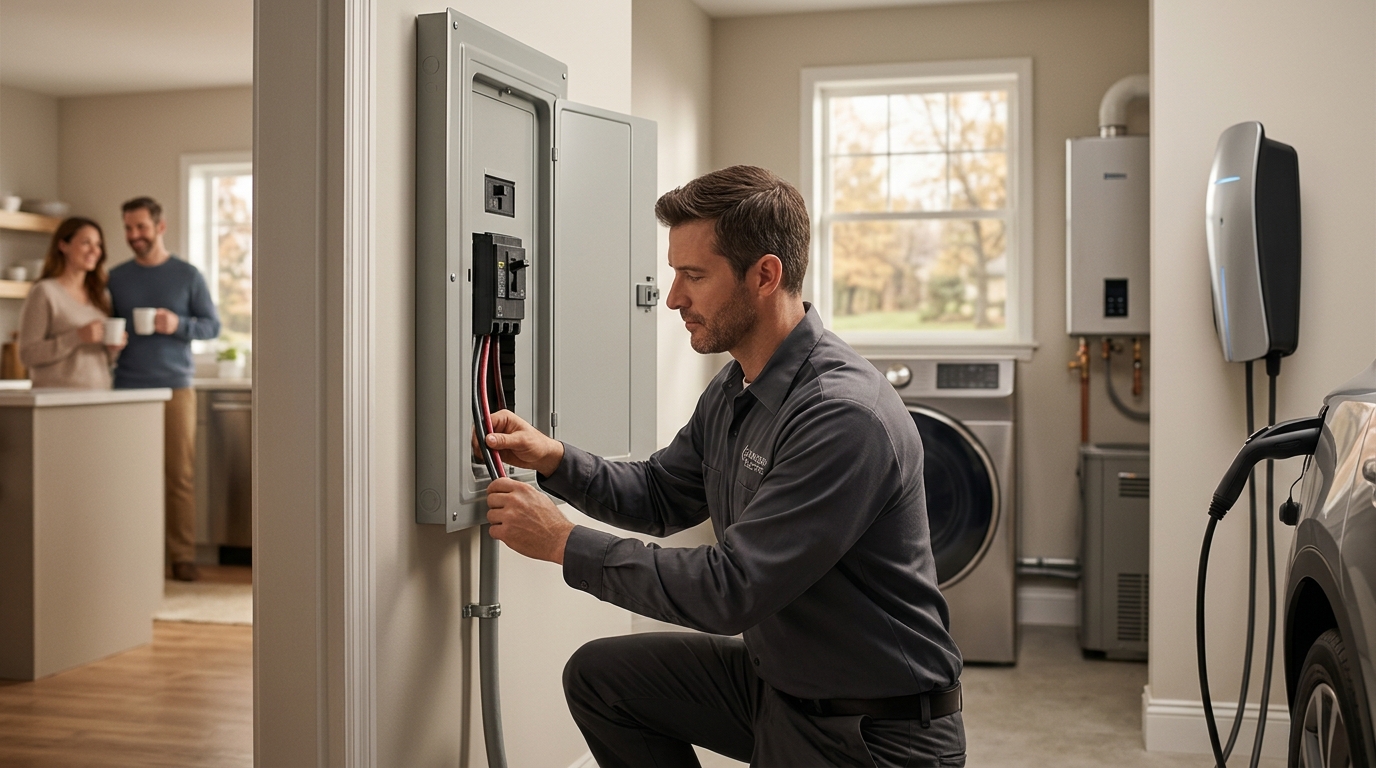
Installing a dedicated circuit is not merely a convenience for high-wattage appliances; it is a critical safety requirement mandated by electrical codes. According to the National Electrical Code (NEC), appliances drawing more than 50 percent of a circuit's capacity must have their own dedicated line to prevent overloads. This standard ensures that devices like electric vehicle chargers, tankless water heaters, and heavy-duty HVAC systems operate without tripping breakers or causing fire hazards. The cost of this installation varies significantly based on the complexity of the run, the location of the main panel, and local labor rates in Upstate New York.
What Is a Dedicated Circuit?
A dedicated circuit is an electrical circuit that runs from the main service panel to a single outlet or appliance. Unlike standard household circuits that power multiple lights or outlets in a room, a dedicated line provides exclusive power to one specific device. This setup prevents the circuit from becoming overloaded when the appliance draws maximum power. For high-wattage devices, sharing a circuit with other electronics can lead to frequent breaker trips, potential damage to the appliance, and serious fire risks.
When you engage a licensed electrician for this work, they will assess the load requirements and ensure the wiring gauge matches the amperage needs. Go Wilson Electric specializes in these precise installations, ensuring that every connection meets the highest safety standards. Our team brings over three decades of combined expertise in construction and power delivery to every job, right here in your area. This expertise is crucial when dealing with the complex wiring requirements of modern high-wattage appliances.
Common Appliances Requiring Dedicated Lines
Not every appliance needs its own circuit, but several high-demand devices absolutely do. Understanding which appliances require dedicated lines can help you plan your home improvement projects more effectively and avoid costly electrical emergencies. (Home Go Wilson Electric)
Electric Vehicle Chargers
As electric vehicles become more common, the demand for home charging stations has surged. Level 2 EV chargers typically require a 240-volt circuit with 30 to 50 amps of power. Installing a dedicated circuit for an EV charger ensures that your vehicle charges efficiently without interfering with other household electronics. The cost for this installation can range widely depending on whether the charger is installed indoors or outdoors. Outdoor installations often require additional weatherproofing and conduit work, which increases material and labor costs.
According to recent industry data, the average cost for EV charger installation in the United States ranges from $500 to $2,000. This variance is largely due to the distance between the electrical panel and the charging location. If your panel is far from your garage or driveway, the cost of running new wiring will be higher. Go Wilson Electric offers specialized car charger install services to handle these complex requirements safely.
Tankless Water Heaters
Tankless water heaters are popular for their energy efficiency and endless hot water supply. However, they are also power-hungry. A typical tankless unit may require a 40 to 100-amp dedicated circuit, depending on the model and the number of fixtures it serves. Older homes often have electrical panels that cannot support the load of a tankless heater without significant upgrades.
In many cases, upgrading the main service panel is necessary to accommodate a tankless water heater. This is a major electrical project that requires careful planning and execution. The cost for a dedicated circuit for a tankless heater can range from $800 to $3,000 or more, especially if a panel upgrade is involved. Our team can evaluate your current panel capacity and recommend the best path forward for your home.
HVAC and Heat Pump Systems
Central air conditioning units and heat pumps are among the most power-intensive systems in a home. These systems often require 240-volt circuits with amperage ranging from 20 to 60 amps. The dedicated circuit ensures that the compressor and fan motors receive consistent power without fluctuations that could damage the unit.
Improper wiring for HVAC systems can lead to inefficient operation and premature failure of the equipment. By installing a dedicated circuit, you protect your investment in climate control. Go Wilson Electric provides comprehensive generator install and solar install services that often integrate with existing HVAC dedicated circuits to ensure seamless power management.
Cost Breakdown and Variables
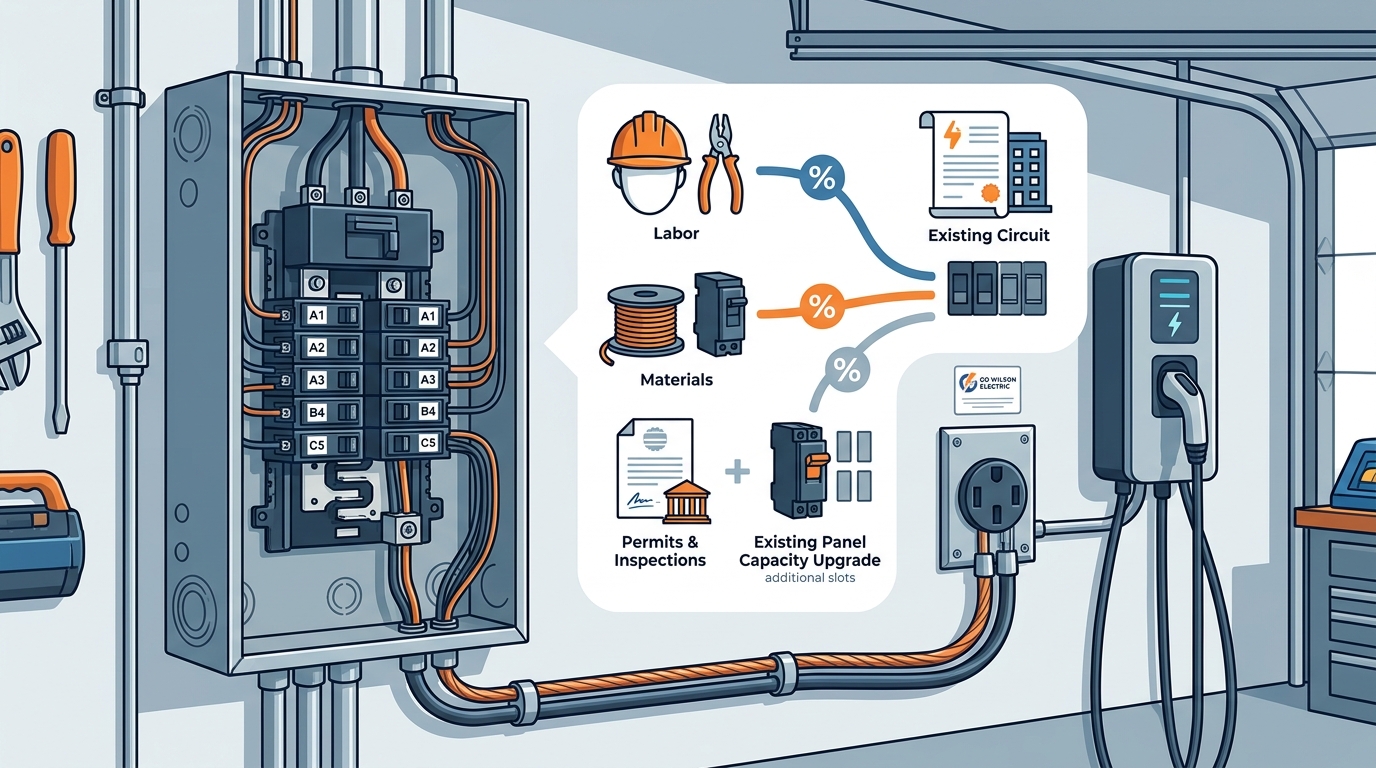
The cost of installing a dedicated circuit is not a flat rate. It depends on several factors, including the length of the wire run, the type of wiring required, and the accessibility of the electrical panel. Below is a general breakdown of cost factors for dedicated circuit installations.
| Factor | Description | Estimated Cost Impact |
|---|---|---|
| Wire Length | Distance from panel to outlet | $5 to $15 per foot |
| Panel Upgrade | Replacing or upgrading the main service panel | $1,500 to $4,000 |
| Conduit Type | EMT, PVC, or flexible conduit requirements | $2 to $10 per foot |
| Labor Rates | Hourly rate for licensed electricians | $75 to $150 per hour |
| Permits | Local building department fees | $50 to $200 |
These estimates provide a baseline for budgeting. However, every home is unique, and the final cost will depend on the specific conditions of your property. Go Wilson Electric offers upfront pricing with no hidden costs, so you will know exactly what to expect before work begins. We believe in straightforward, transparent pricing from start to finish.
The Installation Process
Installing a dedicated circuit involves several steps, from initial assessment to final testing. Understanding this process can help you prepare your home and minimize disruption during the installation.
Step 1: Assessment and Planning
The electrician will evaluate your current electrical panel to determine if there is sufficient space for a new breaker and if the panel can handle the additional load. They will also identify the best route for the new wiring to minimize damage to your home.
Step 2: Routing the Wire
Once the plan is in place, the electrician will run the appropriate gauge wire from the panel to the designated outlet. This may involve drilling through walls, attics, or crawl spaces. In some cases, conduit is required to protect the wire from physical damage.
Step 3: Installing the Breaker and Outlet
The new breaker is installed in the main panel, and the dedicated outlet is connected to the wire. The outlet must be rated for the specific amperage of the circuit. For example, a 50-amp circuit requires a 50-amp rated outlet.
Step 4: Testing and Inspection
After the installation is complete, the electrician will test the circuit to ensure it is functioning correctly. In many jurisdictions, a local inspection is required to verify compliance with electrical codes. Go Wilson Electric ensures that all work meets or exceeds local code requirements.
Safety and Code Compliance
Safety is the primary reason for dedicated circuits. Overloaded circuits can overheat, leading to insulation damage and potential fires. By adhering to the National Electrical Code (NEC), electricians ensure that your home remains safe and compliant. The NEC is updated regularly to reflect new technologies and safety standards. For the latest code requirements, you can refer to the National Fire Protection Association.
Additionally, local building codes may have specific requirements for dedicated circuits in your area. Go Wilson Electric is fully licensed and insured to perform electrical work in Upstate New York. Our team stays up-to-date with the latest code changes to ensure your installation is always compliant. We also offer a security system installation service that often requires dedicated circuits for reliable operation.
Key Takeaways
- Dedicated circuits are required for high-wattage appliances to prevent overloads and ensure safety.
- The cost of installation varies based on wire length, panel capacity, and local labor rates.
- EV chargers, tankless water heaters, and HVAC systems are common appliances requiring dedicated lines.
- Panel upgrades may be necessary for older homes to support new high-wattage devices.
- Go Wilson Electric provides upfront pricing and guarantees quality workmanship for all electrical projects.
- Proper installation and inspection are critical for compliance with the National Electrical Code.
- Our team has over three decades of combined expertise in construction and power delivery.
Frequently Asked Questions
How much does it cost to install a dedicated circuit?
The cost typically ranges from $300 to $1,500 for a standard installation, depending on the distance from the panel and the complexity of the wiring. Major projects involving panel upgrades can cost significantly more.
Can I install a dedicated circuit myself?
While it is technically possible, working with high-voltage electricity is dangerous and often illegal without a license. Most local codes require electrical work to be performed by a licensed electrician to ensure safety and compliance.
What is the difference between a 15-amp and 20-amp circuit?
A 15-amp circuit is typically used for standard lighting and outlets, while a 20-amp circuit can handle more power and is often used for kitchen and bathroom outlets. High-wattage appliances usually require 240-volt circuits with higher amperage.
Do I need a permit for a dedicated circuit?
Yes, most local jurisdictions require permits for new electrical circuits to ensure the work meets safety codes. Go Wilson Electric handles the permit process for all our installations.
How long does the installation take?
A simple dedicated circuit installation can take a few hours, while more complex projects involving panel upgrades or long wire runs may take a full day or more.
Schedule Your Service
Ready to upgrade your home's electrical system? Contact Go Wilson Electric for a free consultation and quote on your electrical project. Our team is ready to help you with safe, reliable, and code-compliant installations. Call 585-54-POWER (585-547-6937) or visit our Contact page to get started.