
Step-by-Step Guide to Safe Electrical Panel Replacement
Upstate New York homeowners face unique challenges when managing aging electrical infrastructure, particularly during harsh winters when power demands spike. According to the National Fire Protection Association, electrical failures are a leading cause of home fires, with outdated panels contributing significantly to these incidents. Replacing an electrical panel is not merely a convenience upgrade; it is a critical safety intervention that protects your family and property from catastrophic electrical hazards. This guide outlines the professional standards required for a safe, code-compliant replacement, ensuring your home remains powered reliably for decades to come.
Why Your Panel Needs Replacement
The electrical panel, often called the service entrance or breaker box, is the central nervous system of your home's power distribution. Over time, components degrade, and safety standards evolve. An electrical panel is the primary distribution point for all electricity entering a residential structure. When this unit fails to meet modern codes, your entire home becomes vulnerable.
Many older homes in Upstate New York still operate with fuse boxes or early-generation breaker panels that lack the capacity for modern appliances. If your home was built before 1980, it likely has a 100-amp service that struggles to support central air, electric vehicle chargers, or high-efficiency heating systems. Upgrading to a 200-amp service is often necessary to support contemporary energy loads without tripping breakers or overheating wires.
Furthermore, safety recalls have affected specific brands of panels. The Federal Trade Commission has noted that certain aluminum wiring and breaker mechanisms pose fire risks if not properly maintained or replaced. Recognizing the signs of a failing panel, such as burning smells, discoloration, or frequent breaker trips, is the first step toward securing your home. (Home Go Wilson Electric)
Critical Safety Protocols
Electrical work involves lethal voltages. The margin for error is zero. Before any physical work begins, strict safety protocols must be observed. A service disconnect is the main switch that cuts off all power to the electrical panel. Locating and operating this switch is the first non-negotiable step in any replacement project.
Professional electricians utilize personal protective equipment (PPE) including insulated gloves, safety glasses, and voltage testers. However, for homeowners, the safest approach is to recognize the limits of DIY capability. The National Electrical Code (NEC) mandates that only qualified personnel perform service entrance work. Attempting to bypass safety switches or working on live circuits can result in severe injury or death.
Additionally, local municipal codes in Upstate New York require permits for panel replacements. These permits ensure that the work is inspected by a certified official who verifies compliance with the latest safety standards. Skipping this step can void home insurance policies and complicate future property sales.
The Step-by-Step Replacement Process
Understanding the workflow helps homeowners prepare their homes for the installation. The process is methodical and requires precision.
1. Power Shutdown and Verification
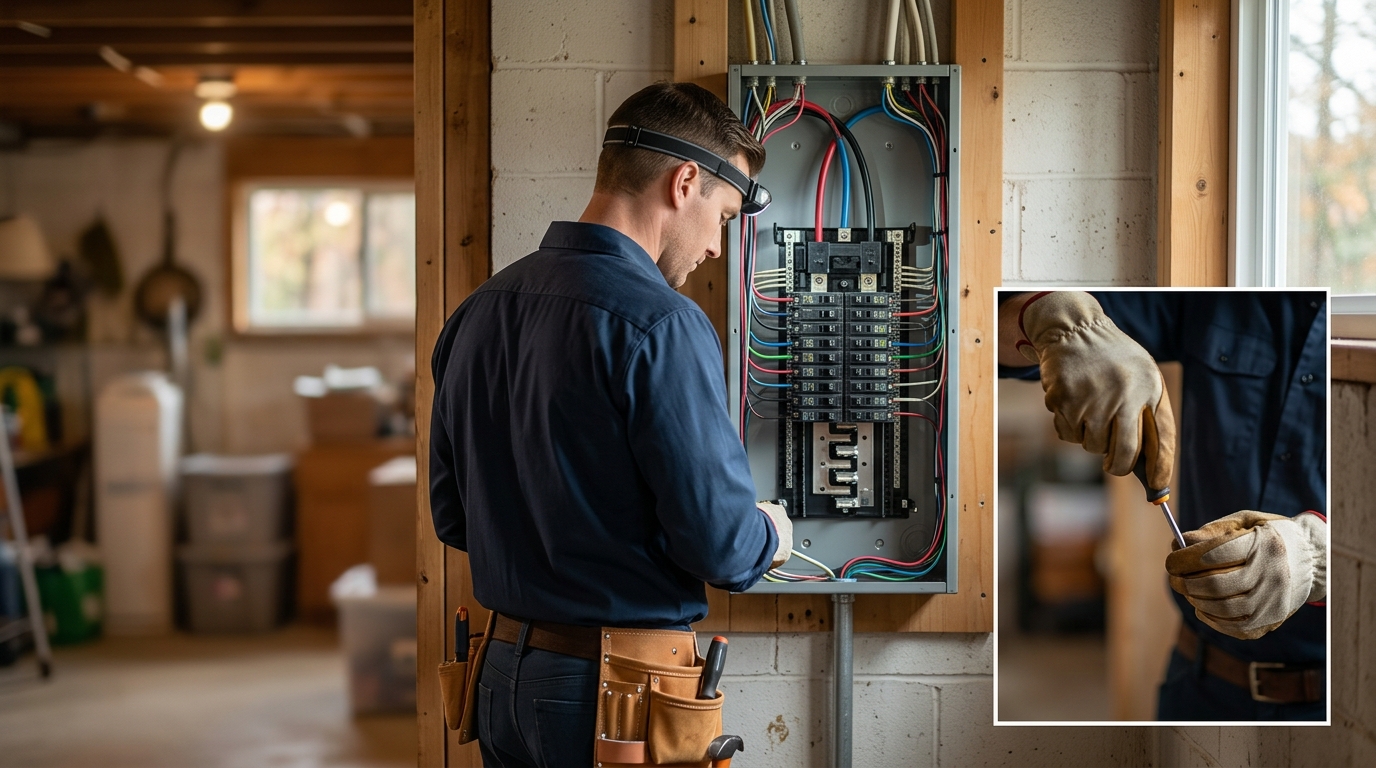
The electrician first locates the main service disconnect. This is often a large double-pole breaker at the top of the panel. Once flipped to the off position, a multimeter is used to verify that no voltage is present at the main lugs. This step confirms that the power is truly dead before any wires are touched.
2. Removing the Old Panel
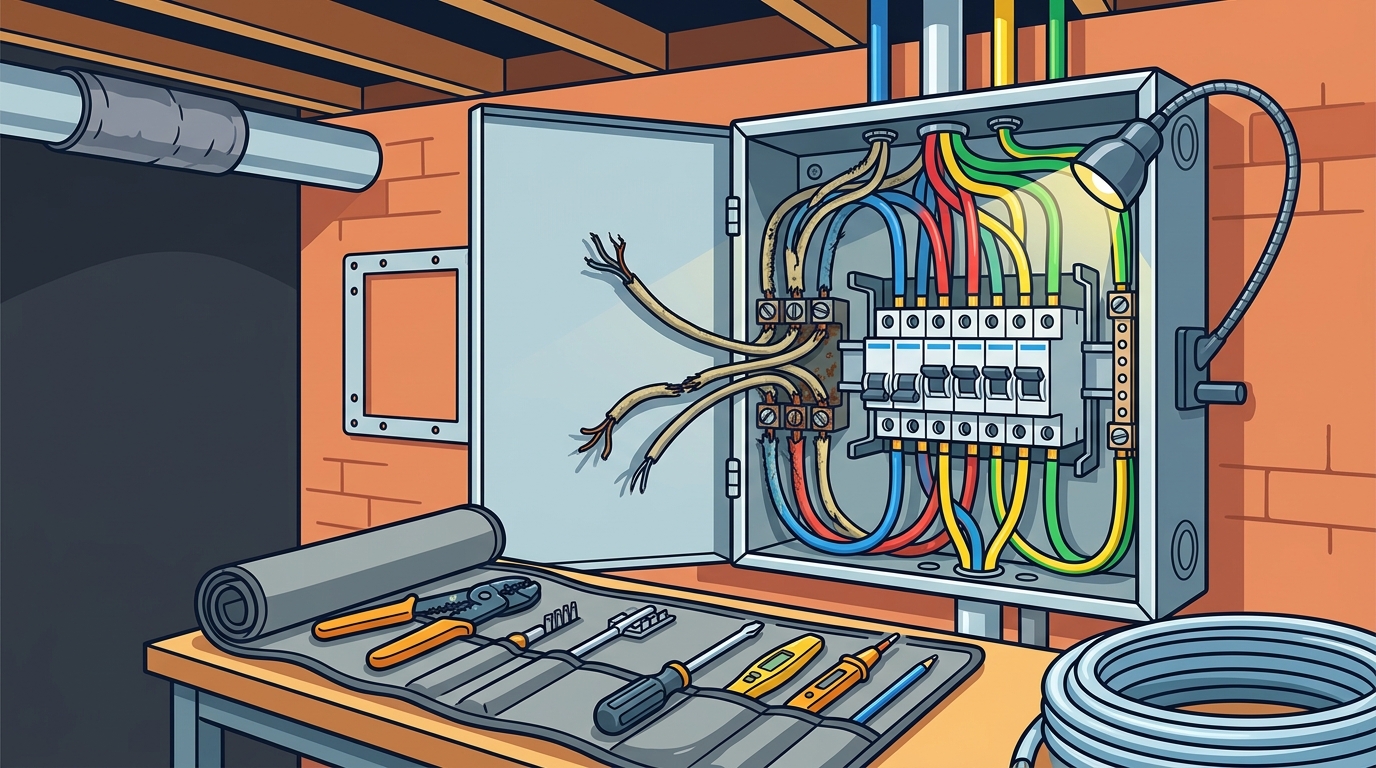
With the power confirmed off, the electrician removes the panel cover. They label every wire connected to the breakers to ensure correct reconnection. The neutral and ground wires are disconnected from the bus bars. Finally, the main service cables entering the panel are unbolted and removed. The old panel is then detached from the wall.
3. Preparing the New Installation
The new panel is mounted to the wall, ensuring it is level and securely fastened to the studs. The electrician drills knockouts for the new service cables. It is crucial to use the correct conduit type, such as liquid-tight flexible metal conduit, to protect wires from moisture and physical damage, especially in damp basements common in the region.
4. Connecting the Service Entrance
The main service cables are connected to the new main breaker. The neutral and ground bars are bonded according to code. In a main service panel, the neutral and ground are connected together at the main bonding jumper. This creates a safe path for fault currents to return to the source, preventing shock hazards.
5. Final Inspection and Power Up
Before the power is restored, the electrician double-checks all connections for tightness. The new breakers are installed, and the panel cover is secured. The main breaker is then turned on, followed by the branch circuit breakers. A final test ensures that all outlets and lights are functioning correctly.
Selecting the Right Equipment
Not all panels are created equal. The choice between brands and amperage depends on your home's specific load calculation. A load calculation is a mathematical assessment of the total electrical demand of a home. This determines whether a 100-amp, 200-amp, or higher service is required.
| Panel Type | Amperage Capacity | Best For | Pros | Cons |
|---|---|---|---|---|
| Standard Breaker Panel | 100-200 Amps | Most Upstate NY Homes | Cost-effective, widely available | May require future upgrade |
| Smart Meter Panel | 200-400 Amps | Large Homes, EV Charging | Remote monitoring, high capacity | Higher initial cost |
| Generator Transfer Switch | Variable | Power Outage Protection | Seamless power transition | Requires generator compatibility |
Brands like Square D, Siemens, and Eaton are industry standards. However, compatibility with existing wiring is crucial. Some older homes may require specific adapter kits to connect legacy wires to modern breakers. Go Wilson Electric specializes in navigating these compatibility challenges to ensure a seamless transition.
Understanding Installation Costs
The cost of a panel replacement varies based on several factors. The complexity of the existing wiring, the distance from the utility meter to the panel, and local permit fees all influence the final price. In Upstate New York, labor rates and material costs fluctuate with seasonal demand.
While DIY might seem appealing, the risk of electrical fire or code violation often outweighs the savings. Professional installation includes a warranty on workmanship and ensures that the utility company will approve the upgrade. According to industry data, a standard 200-amp panel replacement typically ranges from $2,000 to $5,000, depending on the scope of work.
Investing in a high-quality panel also increases home value. Real estate agents often note that updated electrical systems are a key selling point for buyers who fear hidden costs. A certified installation provides peace of mind and protects your investment.
Key Takeaways
- Safety First: Always verify power is off before touching any components. Electrical shock can be fatal.
- Code Compliance: Upstate New York requires permits and inspections for all panel replacements.
- Load Calculation: Determine the correct amperage for your home's current and future needs.
- Professional Expertise: Go Wilson Electric brings over three decades of combined expertise in construction and power delivery.
- Brand Quality: Use reputable brands like Square D or Siemens for long-term reliability.
- Referral Program: Ask about our $50 referral program for recommending our services to neighbors.
- Emergency Support: We offer emergency service for outages and critical electrical failures.
Frequently Asked Questions
How long does a panel replacement take?
A standard residential panel replacement typically takes one to two days. This includes the removal of the old unit, installation of the new panel, and final testing. Complex upgrades involving new service lines may take longer.
Do I need a permit for a panel replacement?
Yes, almost all municipalities in Upstate New York require a permit for electrical panel replacements. This ensures the work meets local safety codes and is inspected by a certified official.
Can I replace my panel myself?
While physically possible, it is highly discouraged. Working with main service lines requires specialized knowledge and tools. Incorrect installation can lead to fire hazards, code violations, and voided insurance policies.
What is the difference between a 100-amp and 200-amp panel?
A 100-amp panel is suitable for older homes with minimal electrical demand. A 200-amp panel provides double the capacity, supporting modern appliances, EV chargers, and central air conditioning without overloading the system.
How do I know if my panel is unsafe?
Signs include burning smells, discoloration around the panel, frequent breaker trips, or the use of recalled brands like Federal Pacific or Zinsco. If you notice any of these, contact a professional immediately.
Does Go Wilson Electric offer free estimates?
Yes, we provide free estimates for all residential and commercial electrical services. Contact us to schedule a consultation and receive a transparent quote.
What brands of panels do you install?
We install top-tier brands such as Square D, Siemens, and Eaton. We ensure compatibility with your existing wiring and meet all local code requirements.
Schedule Your Service
Do not wait for a power failure to address your electrical panel needs. Proactive replacement ensures safety, reliability, and peace of mind for your Upstate New York home. Go Wilson Electric is your trusted partner for all electrical solutions, from simple repairs to complex installations.
Contact us today for a free consultation. Our team is ready to assess your needs and provide a high-quality, code-compliant installation. Call 585-54-POWER (585-547-6937) or visit our Request Quote page to get started.