
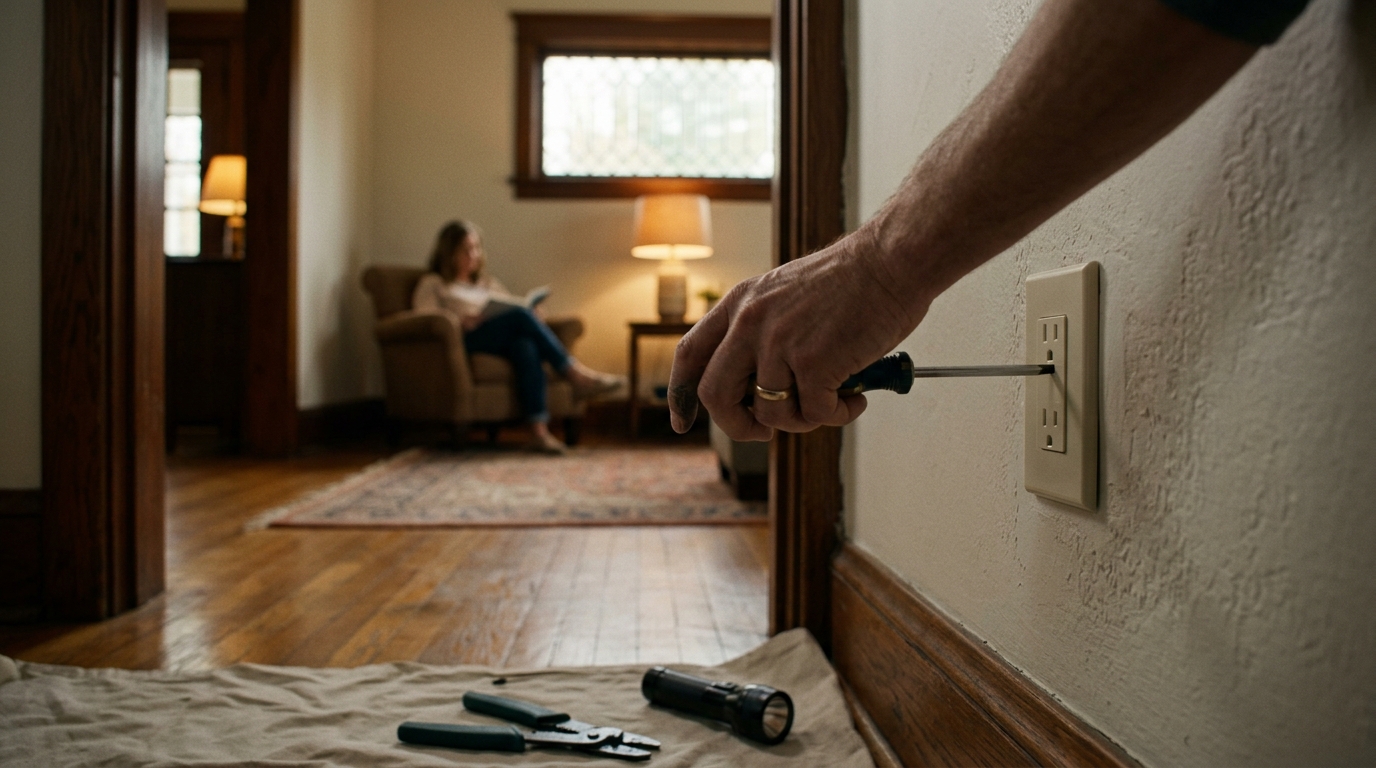
Older homes in Rochester, New York, often possess electrical systems that have not kept pace with modern power demands. According to the National Fire Protection Association, older wiring is a leading factor in home electrical fires, making proactive upgrades essential for resident safety. Go Wilson Electric serves the Upstate New York region with licensed, insured professional services designed to bring historic properties up to current code standards. This guide compares the most critical safety upgrades to help you protect your family and property.
Panel Upgrades and Capacity
The electrical panel acts as the heart of your home's power distribution. In many older Rochester homes, the original panel is rated for only 60 or 100 amps. This capacity is insufficient for modern households that rely on electric heating, air conditioning, and numerous electronic devices. When a panel is overloaded, it can trip frequently or, in worst-case scenarios, overheat and cause a fire.
100-Amp to 200-Amp Upgrades
Upgrading from a 100-amp to a 200-amp panel is the most common service requested by homeowners. This upgrade allows for the safe operation of high-draw appliances such as electric vehicle chargers, hot tubs, and modern HVAC systems. Go Wilson Electric ensures that every panel installation meets the latest National Electrical Code (NEC) requirements. This process involves replacing the main breaker and the bus bars to handle increased load without risk of failure.
Sub-Panels for Additional Load
In some cases, a full panel replacement is not immediately necessary. Installing a sub-panel can provide additional circuit space for specific areas of the home, such as a finished basement or an addition. This approach can be more cost-effective while still improving safety by reducing the load on the main panel. Our team evaluates your home's specific load calculation to determine the best path forward. (Home Go Wilson Electric)
Wiring Replacement Options
Wiring degradation is a silent threat in older homes. Over decades, insulation breaks down, and connections loosen, creating arcing hazards. Identifying the type of existing wiring is the first step in determining the necessary safety upgrades.
Aluminum Wiring Risks
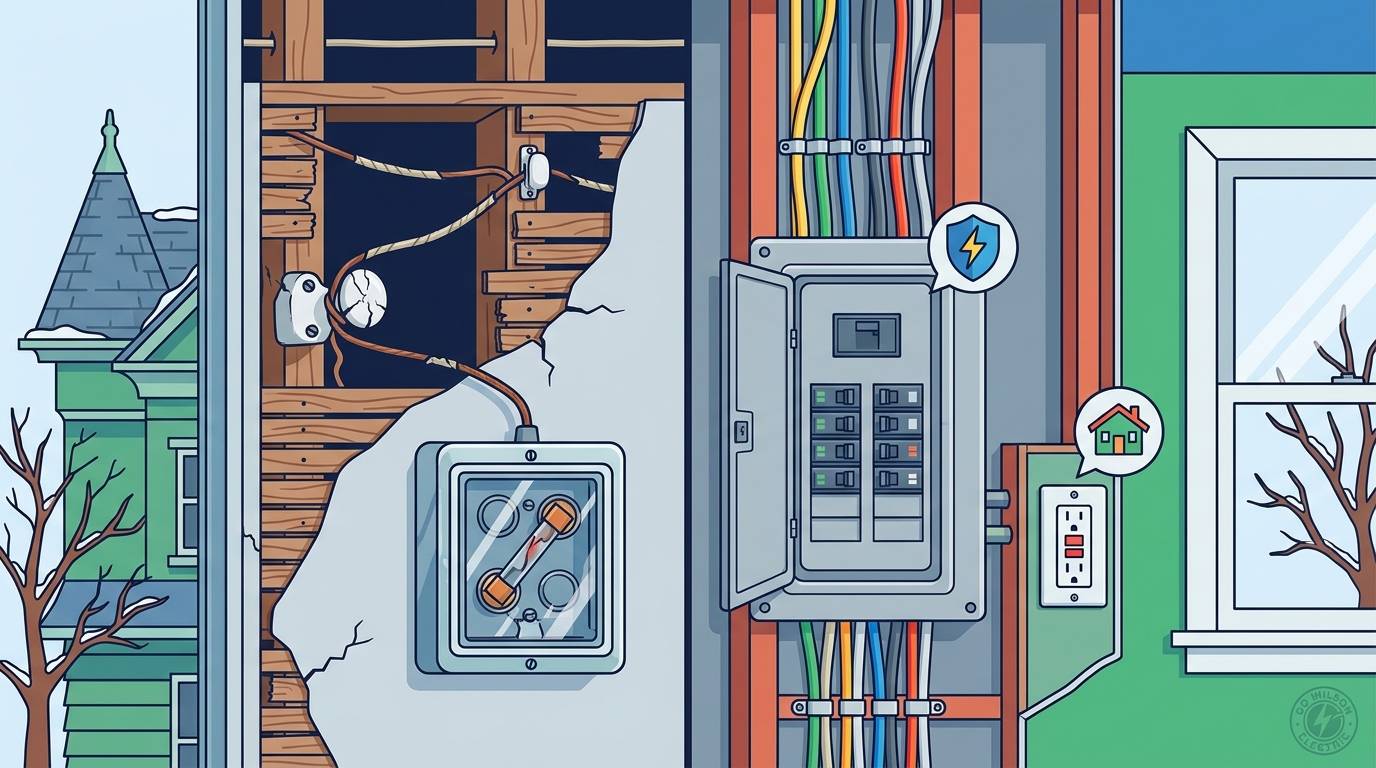
During the 1960s and 1970s, aluminum wiring was used as a cost-effective alternative to copper. However, aluminum expands and contracts more than copper when heated, which can loosen connections and create fire hazards. If your home has aluminum wiring, it is critical to have it inspected by a licensed electrician. Options for mitigation include installing special pigtails at all connection points or replacing the wiring entirely with copper.
Knob and Tube Wiring
Knob and tube wiring is a very old system found in homes built before 1950. It lacks a ground wire and often has no insulation around the conductors. This type of wiring is a significant fire risk and is often rejected by insurance companies. Replacing knob and tube wiring with modern Romex cable is the only permanent solution. This process requires opening walls and ceilings, but it restores the fundamental safety of the electrical system.
Grounding and Surge Protection
Modern electrical safety relies heavily on proper grounding. Older systems often lack a ground wire, which means that fault currents have no safe path to the earth. This increases the risk of electric shock and damage to sensitive electronics. Grounding upgrades are a foundational part of any safety renovation.
Whole-Home Surge Protectors
Lightning strikes and grid fluctuations can send massive voltage spikes through your home's wiring. These spikes can destroy appliances, computers, and smart home devices. A whole-home surge protector installed at the main panel clamps these voltage spikes and directs them to the ground. This device provides the first line of defense for all electronics in your home. It is a relatively low-cost upgrade that offers high-value protection.
Arc Fault Circuit Interrupters (AFCIs)
AFCIs are specialized breakers that detect the unique signature of an electrical arc. Arcing can occur when wires are damaged or connections are loose. These breakers instantly cut power when an arc is detected, preventing the heat from igniting surrounding materials. Modern codes require AFCIs in most living spaces, including bedrooms and living rooms. Upgrading your panel to include AFCI breakers is a critical step in fire prevention.
Comparison of Upgrade Options
Choosing the right upgrade depends on your home's age, current condition, and future needs. The table below summarizes the key differences between the primary safety upgrades.
| Upgrade Option | Primary Benefit | Best For | Complexity |
|---|---|---|---|
| Panel Upgrade | Increased power capacity | Modernizing load demands | Moderate |
| Wiring Replacement | Elimination of fire hazards | Aluminum or Knob & Tube | High |
| Surge Protection | Equipment protection | Electronics and appliances | Low |
| AFCI Breakers | Arc fault detection | Fire prevention in living areas | Moderate |
| GFCI Outlets | Shock prevention | Wet areas and outdoors | Low |
Key Takeaways
- Panel Capacity: Upgrading to 200 amps supports modern appliances and electric vehicles.
- Wiring Safety: Aluminum and knob and tube wiring are significant fire risks requiring professional attention.
- Surge Protection: Whole-home protectors safeguard electronics from grid fluctuations and lightning.
- AFCI/GFCI: These devices are essential for preventing fires and electric shocks in specific areas.
- Professional Inspection: Only a licensed electrician can accurately assess the condition of your home's electrical system.
- Code Compliance: Upgrades ensure your home meets current Upstate New York electrical codes.
- Insurance Benefits: Updated systems may lower insurance premiums and prevent coverage denial.
Frequently Asked Questions
How do I know if my panel is outdated?
If your panel has a fuse box instead of breakers, or if it is rated below 100 amps, it is likely outdated. Frequent tripping or a burning smell near the panel are also warning signs. Go Wilson Electric can perform a thorough inspection to determine if an upgrade is necessary.
Is aluminum wiring dangerous?
Aluminum wiring from the 1960s and 70s is considered hazardous because it can loosen over time and cause arcing. It should be addressed by a professional electrician using approved pigtails or full replacement.
What is the difference between AFCI and GFCI?
AFCI breakers protect against electrical arcs that can cause fires, typically in living areas. GFCI outlets protect against electric shock in wet areas like bathrooms and kitchens. Both are vital for a comprehensive safety strategy.
How long does a panel upgrade take?
A standard panel upgrade typically takes one to two days. The process involves shutting off power, removing the old panel, and installing the new unit. Go Wilson Electric works efficiently to minimize disruption to your home.
Do I need to replace all the wiring in my home?
Not necessarily. If the wiring is copper and in good condition, it may only need grounding upgrades. However, if you have aluminum or knob and tube wiring, replacement is often recommended for long-term safety.
Can I install surge protectors myself?
While plug-in surge protectors are easy to install, whole-home surge protectors require installation at the main panel. This work must be done by a licensed electrician to ensure proper grounding and code compliance.
What is Go Wilson Electric's service area?
Go Wilson Electric serves Rochester and the surrounding Upstate New York region. We provide licensed and insured electrical services to residential and commercial clients.
Schedule Your Service
Protecting your home requires expert knowledge and precise execution. Do not wait for a problem to arise. Contact Go Wilson Electric today to schedule a comprehensive electrical safety inspection. Our team is ready to provide transparent pricing and high-quality workmanship for all your upgrade needs. Request a Free Quote to get started on your peace of mind.