

Older homes in Rochester, New York, often possess electrical systems that were designed for a bygone era of lower energy consumption. According to the National Association of Realtors, homes built before 1980 frequently require significant electrical updates to meet modern safety standards and insurance requirements. This statistic highlights the critical need for homeowners in the Genesee Valley to evaluate their current infrastructure against contemporary safety benchmarks. Upgrading these systems is not merely a convenience but a fundamental necessity for preventing fire hazards and ensuring reliable power delivery in historic properties.
Understanding Aging Wiring Systems
Rochester boasts a rich architectural history, with many neighborhoods featuring homes constructed in the early to mid-20th century. These structures often rely on electrical wiring that has exceeded its intended lifespan. The primary concern with aging wiring is insulation degradation. Over decades, the thermal cycling of heating and cooling causes insulation to become brittle and crack. This exposure allows wires to short circuit or arc, creating significant fire risks.
Electrical safety upgrade options generally fall into two categories: partial repairs and full system replacements. Partial repairs might involve replacing specific sections of damaged wire or upgrading outlets. However, full system replacements are often the more cost-effective long-term solution for homes over 50 years old. A comprehensive upgrade ensures that the entire home meets the National Electrical Code (NEC) standards, providing peace of mind for both residents and insurance providers. (Home Go Wilson Electric)
Knob-and-Tube Identification
One of the most common findings in older Rochester homes is knob-and-tube (K&T) wiring. This system was popular from the late 1800s until the 1940s. It consists of individual insulated copper conductors running through hollow masonry walls or attics. The wires are supported by ceramic knobs and pass through wooden beams via ceramic tubes. This method was innovative for its time but lacks the safety features of modern wiring.
Knob-and-tube wiring is a historical electrical installation method that uses ceramic insulators to support bare or cloth-insulated wires without a ground conductor. The absence of a ground wire means that modern three-prong plugs cannot be safely used without adapters, which can be dangerous if not installed correctly. Furthermore, K&T wiring does not have the capacity to handle the load of modern appliances like air conditioners, electric ranges, or high-powered electronics.
When comparing upgrade options for K&T systems, homeowners typically face two paths. The first is complete removal and replacement with modern Romex cable. This is the gold standard for safety but can be invasive and expensive. The second option is to leave the K&T in place but cap it off and run new wiring for active circuits. While cheaper, this approach may still result in higher insurance premiums or denial of coverage by some carriers.
Aluminum Wiring Risks
Another prevalent issue in homes built between 1965 and 1973 is aluminum wiring. During the mid-20th century, copper prices surged, leading manufacturers to use aluminum as a cheaper alternative. While aluminum is a conductive metal, it expands and contracts more than copper when heated. This thermal movement can loosen connections over time, leading to arcing and overheating at outlets and switches.
Aluminum wiring is a type of electrical conductor used in residential buildings during the 1960s and 1970s that requires special handling due to its tendency to oxidize and loosen connections. The oxidation process creates a resistive layer that generates heat. If this heat is not dissipated, it can melt surrounding materials and ignite a fire. The Underwriters Laboratories (UL) has established specific standards for aluminum wiring, including the use of CO/ALR rated devices.
Comparing the upgrade options for aluminum wiring reveals distinct differences in approach. One option is to replace the aluminum branches with copper wiring entirely. This provides the most robust safety profile but involves significant labor. A more common and cost-effective alternative is pigtail splicing. This method involves connecting a short piece of copper wire to the aluminum wire using a special connector. The copper pigtail is then connected to the device. This technique breaks the direct connection between aluminum and copper devices, preventing galvanic corrosion.
Panel Upgrade Options
The electrical panel is the heart of any home's power distribution system. Older panels, such as those made by Federal Pacific or Zinsco, are known to have safety defects. These panels may fail to trip during an overload, allowing wires to overheat. Upgrading the panel is often a prerequisite for other safety upgrades.
Homeowners in Rochester generally choose between a 100-amp and a 200-amp panel upgrade. A 100-amp panel is sufficient for smaller homes with minimal electric heating or cooking loads. However, a 200-amp panel is recommended for most modern households. It supports electric vehicle chargers, hot tubs, and multiple high-demand appliances simultaneously without tripping breakers.
| Upgrade Option | Best For | Pros | Cons |
|---|---|---|---|
| 100-Amp Panel | Smaller homes, low energy usage | Lower cost, less invasive | Limited capacity for modern appliances |
| 200-Amp Panel | Larger homes, EV chargers, AC | High capacity, future-proof | Higher installation cost |
| Sub-Panel Addition | Expansions, detached garages | Cost-effective for distant loads | Requires additional wiring runs |
Choosing the right panel involves assessing your current load and future needs. If you plan to install an electric vehicle charger, a 200-amp panel is almost certainly required. Go Wilson Electric can perform a detailed load calculation to determine the exact requirements for your specific property. This ensures you do not overpay for capacity you do not need, nor underpay for a system that will soon be inadequate.
Grounding Solutions
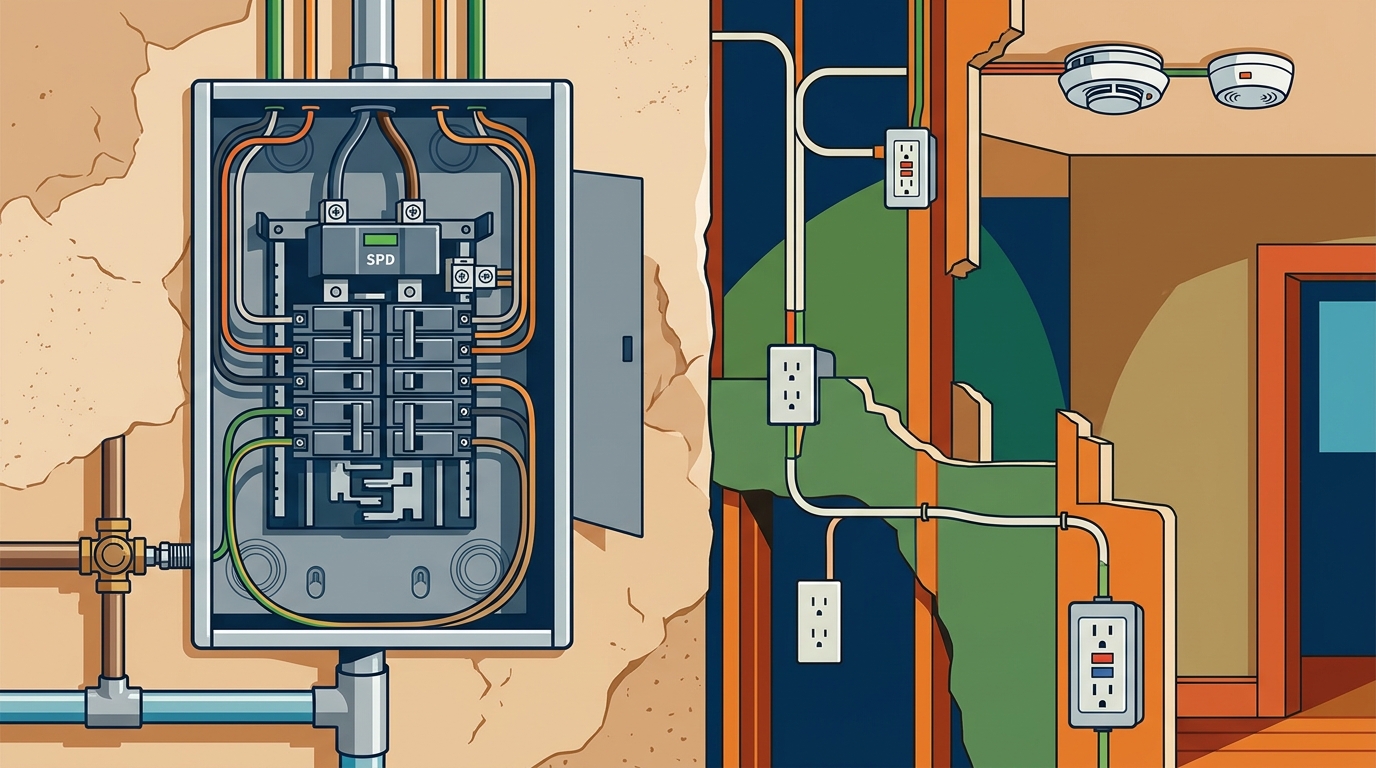
Grounding is the final critical component of electrical safety. It provides a safe path for electricity to travel to the earth in the event of a fault. Older homes often lack a proper grounding system. Without grounding, surge protectors are ineffective, and the risk of electric shock is significantly increased.
For homes with knob-and-tube or ungrounded aluminum wiring, installing a grounding system is essential. One method is to run a new ground wire from the panel to each outlet. This is labor-intensive and may require opening walls. A more modern solution is the use of Ground Fault Circuit Interrupter (GFCI) outlets. GFCIs detect imbalances in current and cut power instantly, providing protection even without a ground wire.
GFCI outlets are safety devices that monitor electrical current and quickly shut off power when a ground fault is detected, preventing severe electric shocks. While GFCIs do not replace the need for grounding in all cases, they are a code-compliant alternative for retrofitting older homes. They are particularly important in kitchens, bathrooms, and outdoor areas where water and electricity may interact.
Key Takeaways
- Historical Context: Homes in Rochester built before 1980 often have wiring that does not meet current safety codes.
- K&T Wiring: Knob-and-tube systems lack a ground wire and have limited capacity, often requiring full replacement for insurance compliance.
- Aluminum Risks: Aluminum wiring from the 1960s and 70s is prone to overheating and requires pigtail splicing or replacement.
- Panel Capacity: Upgrading to a 200-amp panel is recommended for modern homes to support electric vehicles and high-demand appliances.
- Grounding: Proper grounding is essential for surge protection and shock prevention, with GFCIs serving as a vital retrofit solution.
- Professional Assessment: A licensed electrician can perform a load calculation to determine the exact needs of your home.
- Insurance Impact: Updated electrical systems can lower insurance premiums and prevent coverage denials for older properties.
Frequently Asked Questions
How do I know if my Rochester home has knob-and-tube wiring?
You can identify knob-and-tube wiring by inspecting your attic, basement, or crawl spaces. Look for individual cloth-insulated wires running through ceramic knobs and tubes. If you are unsure, a professional inspection is the safest way to confirm its presence.
Is it safe to leave knob-and-tube wiring in place?
Leaving knob-and-tube wiring in place can be safe if it is undamaged and not overloaded. However, many insurance companies will not cover homes with K&T wiring unless it is replaced or capped off. Upgrading is generally recommended for long-term safety and financial protection.
What is the difference between a 100-amp and 200-amp panel?
A 100-amp panel provides less electrical capacity and is suitable for smaller homes with minimal electric loads. A 200-amp panel offers double the capacity, supporting modern appliances, electric vehicle chargers, and central air conditioning without overloading the system.
Can I upgrade my electrical panel without replacing all my wiring?
Yes, you can often upgrade just the panel while keeping existing wiring, provided the wiring is in good condition and properly grounded. However, if the wiring is aluminum or knob-and-tube, additional upgrades may be necessary to ensure safety.
How long does an electrical safety upgrade take?
The timeline varies based on the scope of work. A panel upgrade might take one to two days, while a full rewiring of an older home can take several weeks. Go Wilson Electric provides detailed timelines during the consultation process.
Will upgrading my electrical system increase my home value?
Yes, updated electrical systems are a significant selling point for older homes. They reduce the risk of fire and ensure compatibility with modern technology, making the property more attractive to potential buyers.
What is a GFCI outlet and why do I need one?
A GFCI outlet is a safety device that cuts power when it detects a ground fault. It is essential in wet areas like kitchens and bathrooms to prevent electric shock. GFCIs are required by code in these areas regardless of whether the home has a ground wire.
Secure Your Home with Professional Electrical Services
Protecting your older Rochester home requires a strategic approach to electrical safety upgrades. Whether you need to address knob-and-tube wiring, upgrade your panel, or install grounding solutions, professional expertise is essential. Go Wilson Electric brings over three decades of combined expertise in construction and power delivery to every job. We provide upfront pricing with no hidden costs and guarantee quality workmanship on every project.
Contact us today for a free consultation and quote on your electrical project. Our team is ready to help you navigate the complexities of electrical safety and ensure your home is safe, reliable, and code-compliant. Request Service to get started.