

A major electrical renovation can transform your home's safety, functionality, and long-term value. But jumping into the project without preparation leads to delays, surprise costs, and potential hazards. Whether you are upgrading an outdated panel, rewiring an older upstate New York home, or adding circuits for modern appliances, a little planning goes a long way. This guide walks you through every step you should take before your electrician arrives, so the work goes smoothly from day one. Go Wilson Electric has helped homeowners across upstate New York navigate this process with confidence.
1. Assess Your Current Electrical System
Before any renovation begins, you need a clear picture of what you are working with. An electrical assessment is a professional evaluation of your home's wiring, panel capacity, and safety devices. Walk through your home and note any warning signs: frequently tripped breakers, flickering lights, warm outlets, or two-prong receptacles.
Homes built before 1990 often rely on outdated wiring and undersized panels that cannot support modern electrical demands. A qualified electrician will open your panel, inspect visible wiring in the basement and attic, and identify potential issues before demolition begins.
Warning Signs That Signal Trouble
- Circuit breakers that trip repeatedly
- Discolored or warm outlet covers
- Burning smell near outlets or switches
- Reliance on extension cords for everyday use
2. Set Renovation Goals and Budget
Every successful renovation starts with a clear vision. Define exactly which rooms you are updating, what new appliances or technologies you want to add, and what problems you need to solve. Are you finishing a basement? Adding a home office? Installing an EV charger?
Once your goals are set, establish a realistic budget. Electrical work typically accounts for 10 to 15 percent of a total home renovation budget. Include a contingency of at least 15 percent for unexpected issues like hidden wiring damage or panel replacement needs.
| Common Electrical Upgrade | Typical Cost Range | When It's Needed |
|---|---|---|
| Panel upgrade (100A to 200A) | $1,500 - $3,500 | Adding major appliances or square footage |
| Whole-house rewiring | $8,000 - $15,000+ | Homes with knob-and-tube or aluminum wiring |
| GFCI/AFCI outlet installation | $150 - $300 per outlet | Kitchens, bathrooms, bedrooms (code requirement) |
| Dedicated circuit addition | $200 - $600 per circuit | Hot tubs, EV chargers, home offices |
| Smart home wiring prep | $500 - $2,000 | Automation, security, low-voltage systems |
3. Hire a Licensed Electrician Early
One of the most common mistakes homeowners make is waiting until demolition day to bring in their electrician. An early consultation helps catch potential issues, align the electrical scope with the general contractor's timeline, and prevent costly change orders later.
A licensed electrician is a tradesperson who has completed required training, passed state examinations, and holds the credentials to perform electrical work legally and safely. In New York State, electrical work must be performed or supervised by a licensed professional. The Go Wilson Electric team brings over three decades of combined expertise to every project in upstate New York.
What to Expect at the Initial Consultation
Your electrician will review your renovation plans, perform a load calculation to determine if your panel can handle new demand, and recommend upgrades. This meeting should happen before any walls come down.
4. Understand Permits and Code Requirements
Electrical permits are required for nearly all renovations involving new wiring, outlets, panel upgrades, or circuit additions. Your electrician will pull the necessary permits through your local municipality and schedule inspections at key milestones.
The National Electrical Code (NEC) is the foundation for most local electrical codes. It sets minimum safety standards for wiring, grounding, and device placement. Compliance protects your family and preserves your home's resale value.
Key Code Requirements to Know
- GFCI protection is required in all wet areas (kitchens, bathrooms, garages, outdoors)
- AFCI protection is required in bedrooms and living areas
- Outlets must be spaced no more than 12 feet apart in living rooms
- Kitchen countertop outlets must be no more than 4 feet apart
- Every heavy-load appliance needs a dedicated circuit
5. Plan Your New Electrical Layout
With your goals defined and your electrician on board, it is time to map out the new system. An electrical layout is a detailed plan showing the placement of every outlet, switch, fixture, and circuit in your renovated space. Work from your floor plans and mark wall lengths, doorways, and furniture placement.
Think room by room. A home office may need six or more outlets for computers and peripherals. A kitchen remodel typically requires dedicated circuits for the range, refrigerator, dishwasher, and microwave. Do not forget low-voltage wiring for Ethernet, coaxial cable, and smart home hubs.
6. Prepare Your Living Space
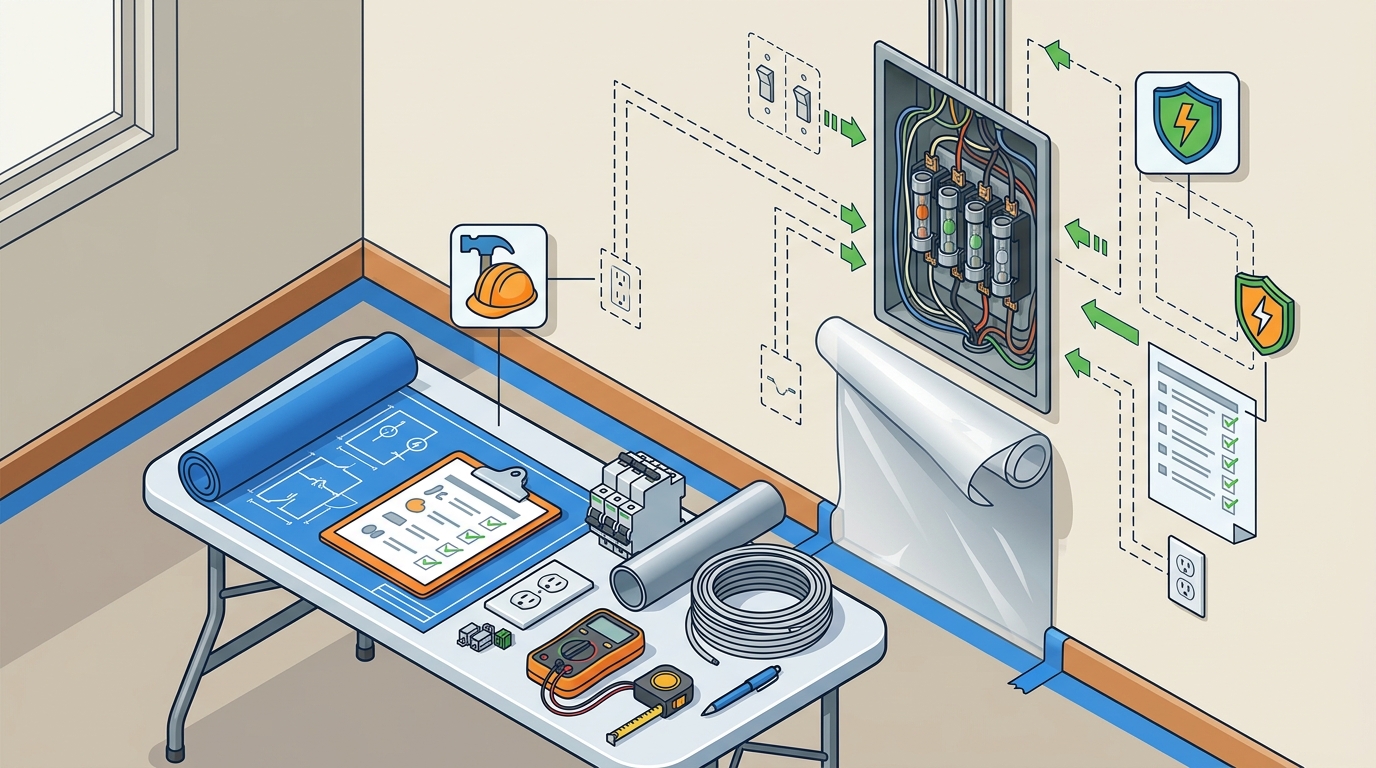
Electrical renovation work is disruptive. Preparing your home before the crew arrives minimizes stress and keeps the project on schedule.
Before Work Begins
- Clear furniture and belongings away from walls where wiring will be run
- Cover floors and remaining furniture with drop cloths
- Arrange temporary living areas if power will be shut off for extended periods
- Secure pets in a safe area away from the work zone
- Confirm the location of your main electrical shutoff with your electrician
Communicate with your electrical contractor about the daily schedule. Knowing when power outages are planned helps you prepare meals, charge devices, and manage your routine.
7. Future-Proof Your Renovation
A renovation is the most cost-effective time to plan for tomorrow's electrical needs. Running conduit or extra wiring while walls are open costs a fraction of retrofitting later.
Consider installing a panel with 20 to 25 percent open capacity for future circuits. Add conduit runs to the garage for an EV charger, pre-wire for a whole-house generator, and include smart home infrastructure throughout. These investments pay off quickly as technology evolves and energy demands increase.
Top Future-Proofing Upgrades
- EV charger-ready 240V outlet in the garage
- Generator transfer switch and inlet box
- Structured wiring panel for data and communication
- USB-C outlets in kitchens and living areas
Key Takeaways
- Always assess your existing electrical system before starting any renovation project.
- Hire a licensed electrician early, ideally during the planning phase, not after demolition.
- Obtain all required permits and ensure your project meets current NEC and local codes.
- Budget 10 to 15 percent of your total renovation cost for electrical work, plus a 15 percent contingency.
- Plan your electrical layout room by room with your electrician using detailed floor plans.
- Prepare your living space by clearing walls, covering furniture, and planning for power outages.
- Future-proof your home by installing extra capacity, conduit, and smart wiring while walls are open.
Frequently Asked Questions
How long does a major electrical renovation take?
Most residential electrical renovations take one to three weeks depending on the scope. A simple panel upgrade may take a day, while a full rewire of a 2,000-square-foot home can take two weeks or more. Your electrician will provide a timeline after the initial assessment.
Do I need a permit for electrical renovation work in New York?
Yes. New York State requires permits for most electrical work, including new circuits, panel upgrades, and rewiring. Your licensed electrician will handle the permit process and schedule required inspections with your local code enforcement office.
Can I live in my home during an electrical renovation?
In most cases, yes. Your electrician will coordinate power shutoffs to minimize disruption. For extensive rewiring projects, you may lose power to certain rooms for several hours at a time. Plan ahead with charged devices and portable lighting.
How do I know if my electrical panel needs an upgrade?
If your panel is rated below 100 amps, uses fuses instead of breakers, or has no open breaker spaces, it likely needs upgrading. Frequent breaker trips and the inability to add new circuits are also clear indicators.
What is the difference between GFCI and AFCI protection?
A GFCI (Ground Fault Circuit Interrupter) is a safety device that shuts off power when it detects current flowing through an unintended path, such as water. An AFCI (Arc Fault Circuit Interrupter) is a device that detects dangerous electrical arcs that could cause fires. Modern code requires both in specific areas of the home.
Should I upgrade my wiring if my home was built before 1980?
Strongly consider it. Homes from that era may contain knob-and-tube wiring, aluminum wiring, or undersized copper circuits. These older systems pose fire and shock risks and often cannot support modern appliance loads. A licensed electrician can inspect and advise on the best course of action.
How much does a whole-house electrical renovation cost?
Costs vary widely based on home size, age, and scope. Expect to invest $8,000 to $15,000 or more for a full rewire of an average-sized home. Panel upgrades, GFCI/AFCI installation, and smart wiring add to the total. Get a detailed estimate from a trusted local electrician before committing.
Ready to Start Your Electrical Renovation?
Proper preparation makes the difference between a stressful renovation and a smooth one. If you are planning a major electrical upgrade in upstate New York, the experienced team at Go Wilson Electric is ready to help. Contact Go Wilson Electric today for a consultation and get your project started on the right foot.